
Hardware Component Modeling -

-20% with code BOOKS
Shipping in 22-28 days
30-day return policy
The VITAL specification addresses the issues of interoperability, backannotation and high performance simulation for sign-off quality ASIC libraries in VHDL. VITAL provides modeling guidelines and a set of pre-defined packages (containing pre-defined routines for modeling functionality and timing) to facilitate the acceleration of designs which use cells from a VITAL library. The VITAL Level-I guidelines co ... Full description
You May Also Like


 TOP
TOP

If Anyone Builds It, Everyone Dies: The Case Against Superintelligent AI
Eliezer Yudkowsky, Nate Soares
-20% with code BOOKS
In stock at our supplier
TOP


We Are Not Machines: The Fight for the Future of Work
-20% with code BOOKS
In stock at our supplier
TOP
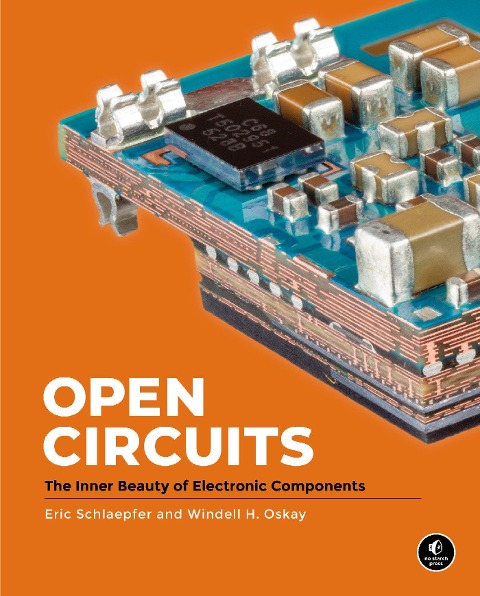
Open Circuits: The Inner Beauty of Electronic Components
Eric Schlaepfer, Windell Oskay
-20% with code BOOKS
In stock at our supplier
TOP
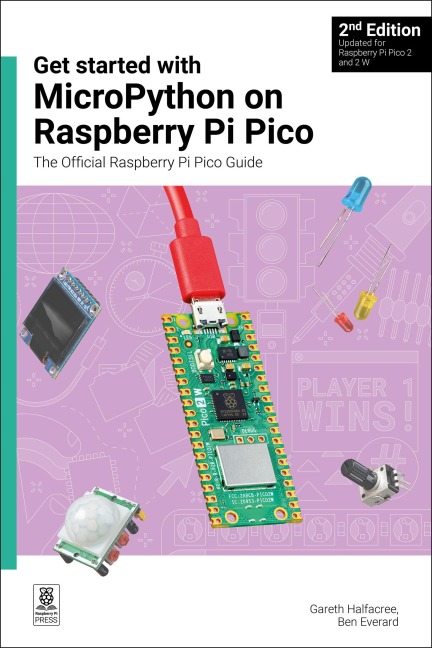
Get started with MicroPython on Raspberry Pi Pico: The Official Raspberry Pi Pico Guide
-20% with code BOOKS
In stock at our supplier
TOP

Practical Electronics for Inventors
-20% with code BOOKS
In stock at our supplier
TOP

Fundamentals of Aerodynamics ISE
Christopher Cadou, John D. Anderson
-20% with code BOOKS
In stock at our supplier
TOP

Nucleo Boards Programming with the STM32CubeIDE: Hands-on in more than 50 projects
-20% with code BOOKS
In stock at our supplier
TOP

Black Holes: The Key to Understanding the Universe
-20% with code BOOKS
In stock at our supplier
TOP
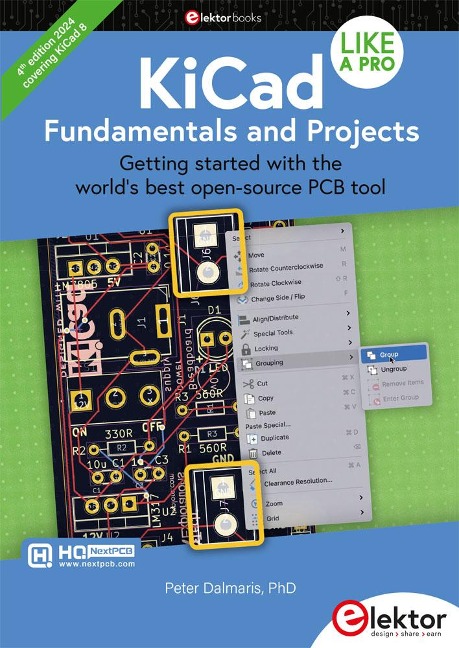
KiCad Like A Pro - Fundamentals and Projects: Getting started with the world's best open-source PCB tool
-20% with code BOOKS
In stock at our supplier
TOP
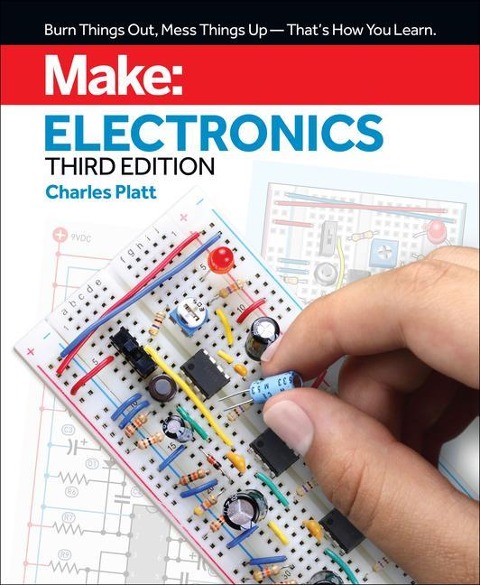
Make: Electronics: Learning by Discovery: A hands-on primer for the new electronics enthusiast
-20% with code BOOKS
In stock at our supplier
TOP

Data-Driven Science and Engineering: Machine Learning, Dynamical Systems, and Control
Steven L. Brunton, J. Nathan Kutz
-20% with code BOOKS
In stock at our supplier
TOP

Flowers For Algernon: A Modern Literary Classic
-20% with code BOOKS
In stock at our supplier
TOP

Foundations of Flavor: The Noma Guide to Fermentation: Including Step-By-Step Information on Making and Cooking with: Koji, Kombuchas, Shoyus, Misos, Vinegars, Garums, Lacto-Ferments and black Fruits Vegetables
-20% with code BOOKS
In stock at our supplier
TOP
Professional SMD Assembly: Practical Low-Cost Methods for Reliable PCB Production
-20% with code BOOKS
In stock at our supplier
TOP

Digital Design and Computer Architecture, RISC-V Edition
-20% with code BOOKS
In stock at our supplier
TOP

Blood in the Machine: The Origins of the Rebellion Against Big Tech
-20% with code BOOKS
In stock at our supplier
TOP

Mastering the Arduino Uno R4: Programming and Projects for the Minima and WiFi
-20% with code BOOKS
In stock at our supplier
TOP

Collection of Exercises for PLC Programming: 100 programming exercises from beginner to expert level
-20% with code BOOKS
In stock at our supplier
Description
The VITAL specification addresses the issues of interoperability, backannotation and high performance simulation for sign-off quality ASIC libraries in VHDL. VITAL provides modeling guidelines and a set of pre-defined packages (containing pre-defined routines for modeling functionality and timing) to facilitate the acceleration of designs which use cells from a VITAL library. The VITAL Level-I guidelines constrain the modeling capabilities provided by VHDL in order to facilitate higher performance (Figure I). Accumulating "gains" Constrained "flexibility" Higher performance & Increased capacity Benefits Flexibility FujI VHDL 1076 Figure 1: VHDL and VITAL Even within the Level-I guidelines, there are several ways in which a model can be written. In this chapter, we highlight the various modeling trade-offs and provide guidelines which can be used for developing efficient models. We will also discuss the techniques that can be used by tool developers to accelerate the simulation of VIT AL based designs. 2.2. OVERVIEW OF A VITAL LEVEL-l ARCIDTECTURE The VITAL specification is versatile enough to support several modeling styles e.g., distributed delay style, pin-to-pin delay style etc. In general, a VITAL Level-I model can have the structure illustrated in Figure 2.
More Information
| Publisher | Springer Us |
|---|---|
| Release year | 1996 |
| Cover type | Hardcover |
| EAN | 9780792396864 |