
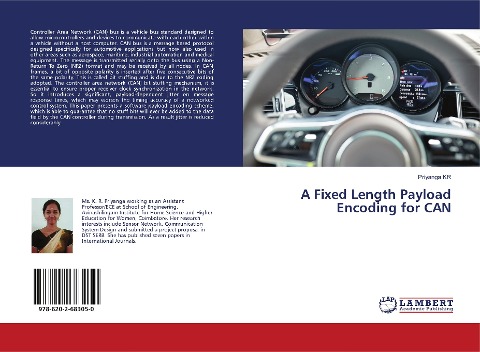
A Fixed Length Payload Encoding for CAN - Priyanga Kr
-20% with code BOOKS
Shipping in 12-18 days
30-day return policy
Controller Area Network (CAN) bus is a vehicle bus standard designed to allow microcontrollers and devices to communicate with each other within a vehicle without a host computer. CAN bus is a message based protocol designed specifically for automotive applications but now also used in other areas such as aerospace, maritime, industrial automation and medical equipment. The message is transmitted serially o ... Full description
You May Also Like

 TOP
TOP
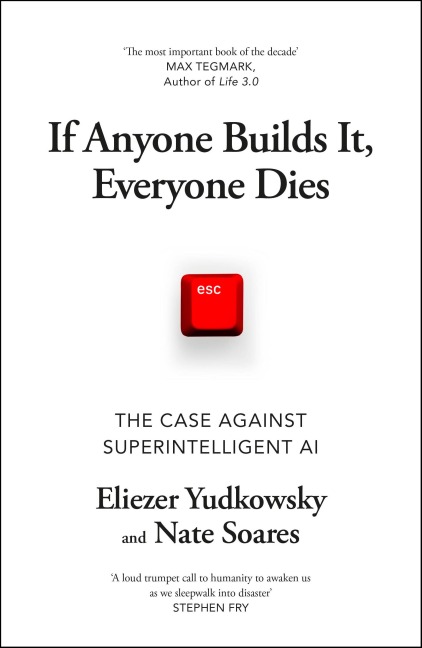
If Anyone Builds It, Everyone Dies: The Case Against Superintelligent AI
Eliezer Yudkowsky, Nate Soares
-20% with code BOOKS
In stock at our supplier
 TOP
TOP
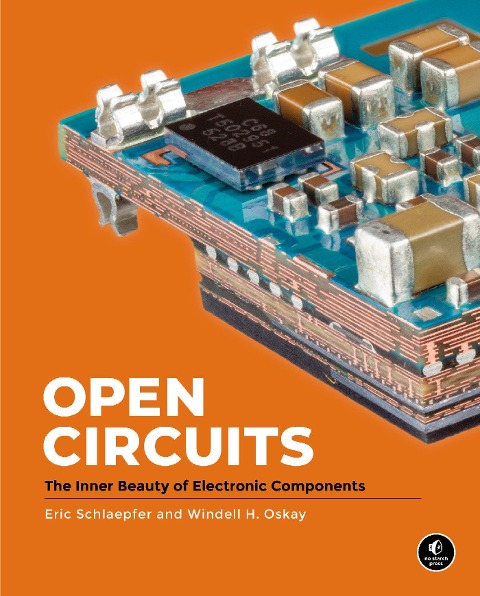
Open Circuits: The Inner Beauty of Electronic Components
Eric Schlaepfer, Windell Oskay
-20% with code BOOKS
In stock at our supplier
TOP
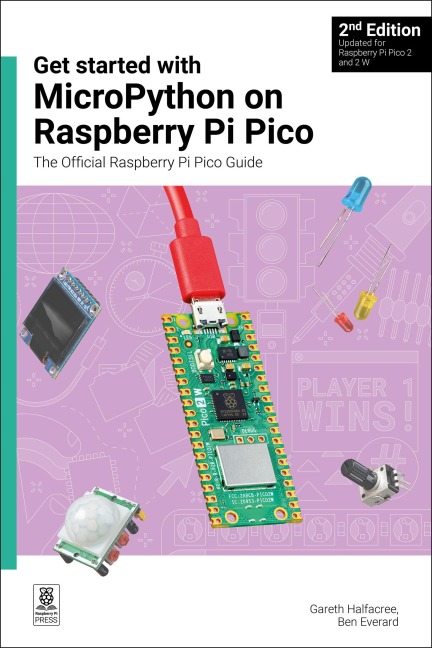
Get started with MicroPython on Raspberry Pi Pico: The Official Raspberry Pi Pico Guide
-20% with code BOOKS
In stock at our supplier
TOP
Practical Electronics for Inventors
-20% with code BOOKS
In stock at our supplier
TOP

Nucleo Boards Programming with the STM32CubeIDE: Hands-on in more than 50 projects
-20% with code BOOKS
In stock at our supplier
TOP
Data-Driven Science and Engineering: Machine Learning, Dynamical Systems, and Control
Steven L. Brunton, J. Nathan Kutz
-20% with code BOOKS
In stock at our supplier
TOP
Fundamentals of Aerodynamics ISE
Christopher Cadou, John D. Anderson
-20% with code BOOKS
In stock at our supplier
TOP

Black Holes: The Key to Understanding the Universe
-20% with code BOOKS
In stock at our supplier
TOP
KiCad Like A Pro - Fundamentals and Projects: Getting started with the world's best open-source PCB tool
-20% with code BOOKS
In stock at our supplier
TOP

Foundations of Flavor: The Noma Guide to Fermentation: Including Step-By-Step Information on Making and Cooking with: Koji, Kombuchas, Shoyus, Misos, Vinegars, Garums, Lacto-Ferments and black Fruits Vegetables
-20% with code BOOKS
In stock at our supplier
TOP
Make: Electronics: Learning by Discovery: A hands-on primer for the new electronics enthusiast
-20% with code BOOKS
In stock at our supplier
TOP

The Idea Factory: Bell Labs and the Great Age of American Innovation
-20% with code BOOKS
In stock at our supplier
TOP

Flowers For Algernon: A Modern Literary Classic
-20% with code BOOKS
In stock at our supplier
TOP

Professional SMD Assembly: Practical Low-Cost Methods for Reliable PCB Production
-20% with code BOOKS
In stock at our supplier
TOP

Blood in the Machine: The Origins of the Rebellion Against Big Tech
-20% with code BOOKS
In stock at our supplier
 TOP
TOP
Learning the Art of Electronics: A Hands-On Lab Course
Thomas C. Hayes, Paul Horowitz, David Abrams
-20% with code BOOKS
In stock at our supplier
TOP
Raspberry Pi 5 for Radio Amateurs: Program and Build Raspberry Pi 5 Based Ham Station Utilities with the RTL-SDR
-20% with code BOOKS
In stock at our supplier
Description
Controller Area Network (CAN) bus is a vehicle bus standard designed to allow microcontrollers and devices to communicate with each other within a vehicle without a host computer. CAN bus is a message based protocol designed specifically for automotive applications but now also used in other areas such as aerospace, maritime, industrial automation and medical equipment. The message is transmitted serially onto the bus using a Non-Return To Zero (NRZ) format and may be received by all nodes. In CAN frames, a bit of opposite polarity is inserted after five consecutive bits of the same polarity. This is called bit stuffing and is due to the NRZ coding adopted. The controller area network (CAN) bit stuffing mechanism, it is essential to ensure proper receiver clock synchronization in the network. So it introduces a significant, payload-dependent jitter on message response times, which may worsen the timing accuracy of a networked control system. This paper presents a software payload encoding scheme, which is able to guarantee that no stuff bits will ever be added to the data field by the CAN controller during transmission. As a result jitter is reduced considerably.
More Information
| Author | Priyanga Kr |
|---|---|
| Publisher | LAP LAMBERT Academic Publishing |
| Release year | 2020 |
| Cover type | Softcover |
| EAN | 9786202683050 |