
A Reformulation-Linearization Technique for Solving Discrete and Continuous Nonconvex Problems - W. P. Adams,Hanif D. Sherali

-20% with code BOOKS
Shipping in 17-23 days
30-day return policy
This book deals with the theory and applications of the Reformulation- Linearization/Convexification Technique (RL T) for solving nonconvex optimization problems. A unified treatment of discrete and continuous nonconvex programming problems is presented using this approach. In essence, the bridge between these two types of nonconvexities is made via a polynomial representation of discrete constraints. For e ... Full description
You May Also Like
 TOP
TOP

Determined: The Science of Life Without Free Will
-20% with code BOOKS
In stock at our supplier
 TOP
TOP

The Rise and Fall of the Dinosaurs: A New History of a Lost World
-20% with code BOOKS
In stock at our supplier
TOP
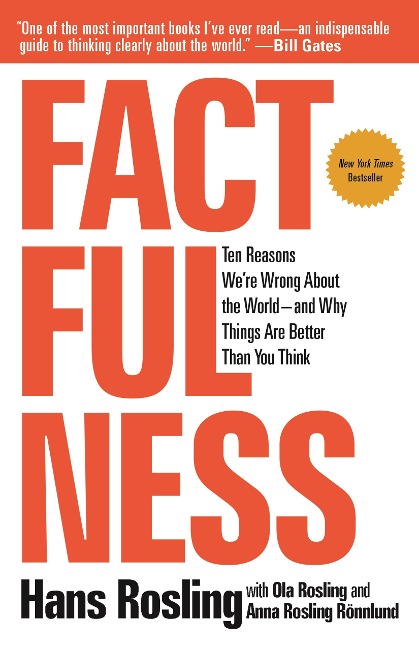
Factfulness: Ten Reasons We're Wrong About the World--and Why Things Are Better Than You Think
Ola Rosling, Anna Rosling Rönnlund, Hans Rosling
-20% with code BOOKS
In stock at our supplier
TOP

Biology: A Global Approach, Global Edition
Neil Campbell, Rebecca Orr, Lisa Urry, Peter Minorsky, Michael Cain, Jane Reece, Steven Wasserman
-20% with code BOOKS
In stock at our supplier
TOP

Six Not-so-easy Pieces: Einstein's Relativity, Symmetry, and Space-Time
Richard P. Feynman, Robert B. Leighton, Matthew Sands
-20% with code BOOKS
In stock at our supplier
TOP

Entangled Life: How Fungi Make Our Worlds, Change Our Minds and Shape Our Futures
-20% with code BOOKS
In stock at our supplier
TOP

The Light Eaters: How the Unseen World of Plant Intelligence Offers a New Understanding of Life on Earth
-20% with code BOOKS
In stock at our supplier
TOP


The Age of Alchemy: How Early Innovators Shaped Modern Chemistry
-20% with code BOOKS
In stock at our supplier
TOP

The Secrets of our DNA: How Genetics has Changed the World
-20% with code BOOKS
In stock at our supplier
TOP

Janeway's Immunobiology
Leslie J. Berg, Kenneth Murphy, Casey Weaver
-20% with code BOOKS
In stock at our supplier
TOP
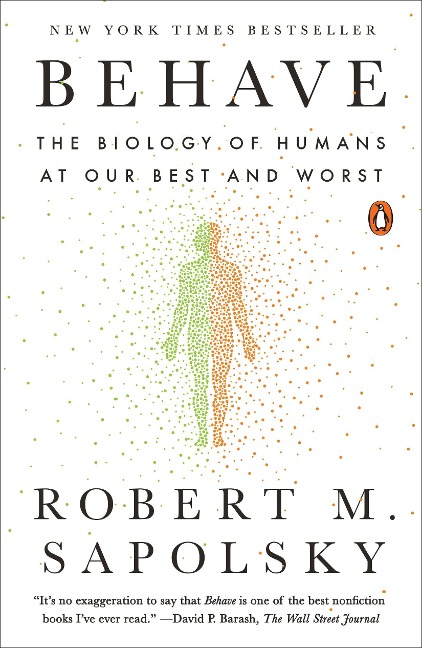
Behave: The Biology of Humans at Our Best and Worst
-20% with code BOOKS
In stock at our supplier
TOP
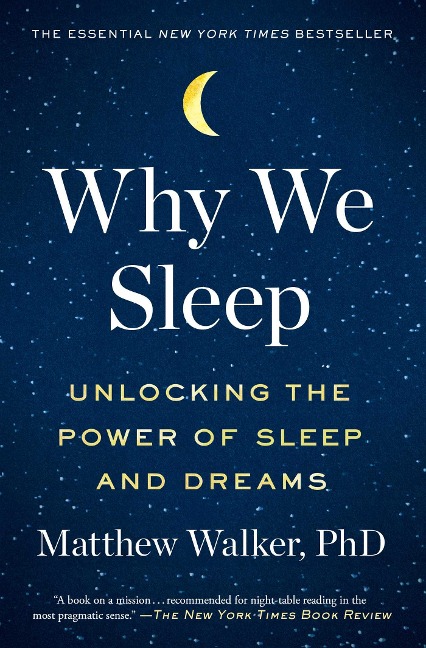
Why We Sleep: Unlocking the Power of Sleep and Dreams
-20% with code BOOKS
In stock
TOP
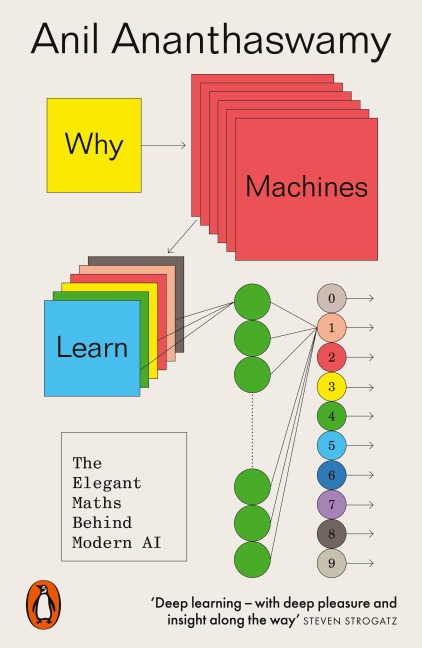
Why Machines Learn: The Elegant Maths Behind Modern AI
-20% with code BOOKS
In stock at our supplier
TOP

Life As No One Knows It: The Physics of Life's Emergence
-20% with code BOOKS
In stock at our supplier
TOP

The Rise and Reign of the Mammals: A New History, from the Shadow of the Dinosaurs to Us
-20% with code BOOKS
In stock at our supplier
TOP
Learn Faster, Perform Better: A Musician's Guide to the Neuroscience of Practicing
-20% with code BOOKS
In stock at our supplier
TOP
The Brain That Changes Itself: Stories of Personal Triumph from the Frontiers of Brain Science
-20% with code BOOKS
In stock at our supplier
 TOP
TOP

How to Solve it: A New Aspect of Mathematical Method
-20% with code BOOKS
In stock at our supplier
Description
This book deals with the theory and applications of the Reformulation- Linearization/Convexification Technique (RL T) for solving nonconvex optimization problems. A unified treatment of discrete and continuous nonconvex programming problems is presented using this approach. In essence, the bridge between these two types of nonconvexities is made via a polynomial representation of discrete constraints. For example, the binariness on a 0-1 variable x . can be equivalently J expressed as the polynomial constraint x . (1-x . ) = 0. The motivation for this book is J J the role of tight linear/convex programming representations or relaxations in solving such discrete and continuous nonconvex programming problems. The principal thrust is to commence with a model that affords a useful representation and structure, and then to further strengthen this representation through automatic reformulation and constraint generation techniques. As mentioned above, the focal point of this book is the development and application of RL T for use as an automatic reformulation procedure, and also, to generate strong valid inequalities. The RLT operates in two phases. In the Reformulation Phase, certain types of additional implied polynomial constraints, that include the aforementioned constraints in the case of binary variables, are appended to the problem. The resulting problem is subsequently linearized, except that certain convex constraints are sometimes retained in XV particular special cases, in the Linearization/Convexijication Phase. This is done via the definition of suitable new variables to replace each distinct variable-product term. The higher dimensional representation yields a linear (or convex) programming relaxation.
More Information
| Author | W. P. Adams, Hanif D. Sherali |
|---|---|
| Publisher | Springer US |
| Series | Nonconvex Optimization and Its Applications |
| Release year | 1998 |
| Cover type | Hardcover |
| EAN | 9780792354871 |