
A VLSI Architecture for Concurrent Data Structures - J. W. Dally

-20% with code BOOKS
Shipping in 17-23 days
30-day return policy
Concurrent data structures simplify the development of concurrent programs by encapsulating commonly used mechanisms for synchronization and commu nication into data structures. This thesis develops a notation for describing concurrent data structures, presents examples of concurrent data structures, and describes an architecture to support concurrent data structures. Concurrent Smalltalk (CST), a derivati ... Full description
You May Also Like

 TOP
TOP

INCOSE Systems Engineering Handbook
-20% with code BOOKS
In stock at our supplier
TOP
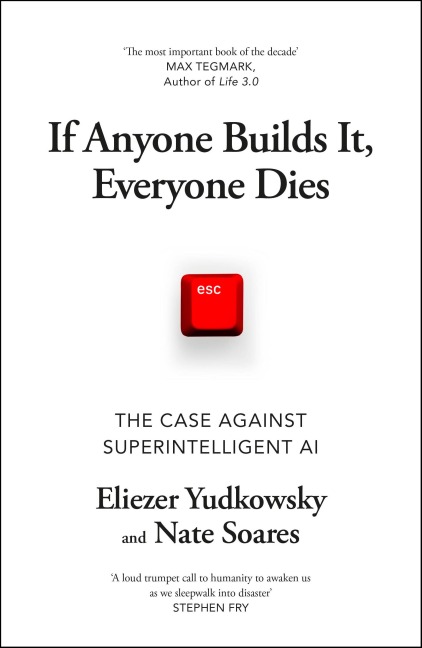
If Anyone Builds It, Everyone Dies: The Case Against Superintelligent AI
Eliezer Yudkowsky, Nate Soares
-20% with code BOOKS
In stock at our supplier
 TOP
TOP
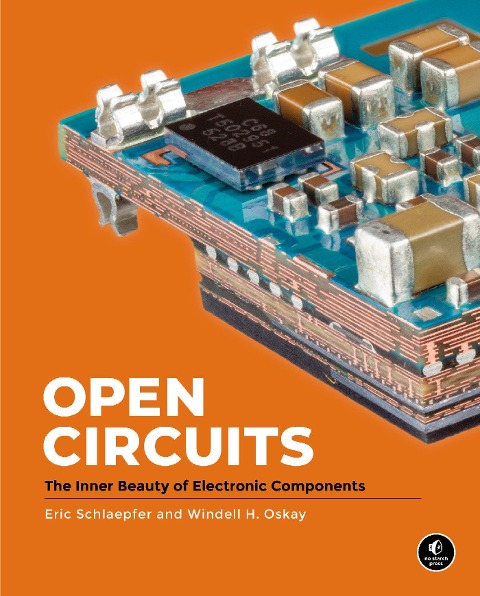
Open Circuits: The Inner Beauty of Electronic Components
Eric Schlaepfer, Windell Oskay
-20% with code BOOKS
In stock at our supplier
TOP
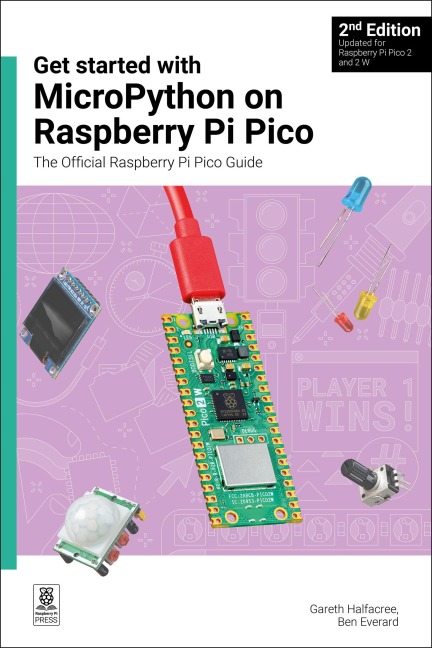
Get started with MicroPython on Raspberry Pi Pico: The Official Raspberry Pi Pico Guide
-20% with code BOOKS
In stock at our supplier
TOP
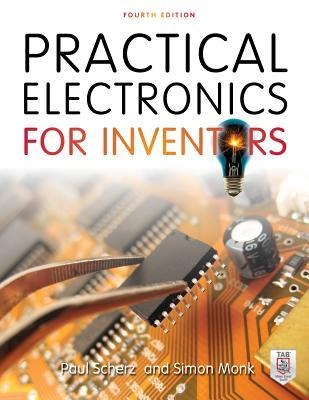
Practical Electronics for Inventors
-20% with code BOOKS
In stock at our supplier
TOP

Nucleo Boards Programming with the STM32CubeIDE: Hands-on in more than 50 projects
-20% with code BOOKS
In stock at our supplier
TOP
Data-Driven Science and Engineering: Machine Learning, Dynamical Systems, and Control
Steven L. Brunton, J. Nathan Kutz
-20% with code BOOKS
In stock at our supplier
TOP
Fundamentals of Aerodynamics ISE
Christopher Cadou, John D. Anderson
-20% with code BOOKS
In stock at our supplier
TOP

Black Holes: The Key to Understanding the Universe
-20% with code BOOKS
In stock at our supplier
TOP
KiCad Like A Pro - Fundamentals and Projects: Getting started with the world's best open-source PCB tool
-20% with code BOOKS
In stock at our supplier
TOP

Foundations of Flavor: The Noma Guide to Fermentation: Including Step-By-Step Information on Making and Cooking with: Koji, Kombuchas, Shoyus, Misos, Vinegars, Garums, Lacto-Ferments and black Fruits Vegetables
-20% with code BOOKS
In stock at our supplier
TOP
Make: Electronics: Learning by Discovery: A hands-on primer for the new electronics enthusiast
-20% with code BOOKS
In stock at our supplier
TOP
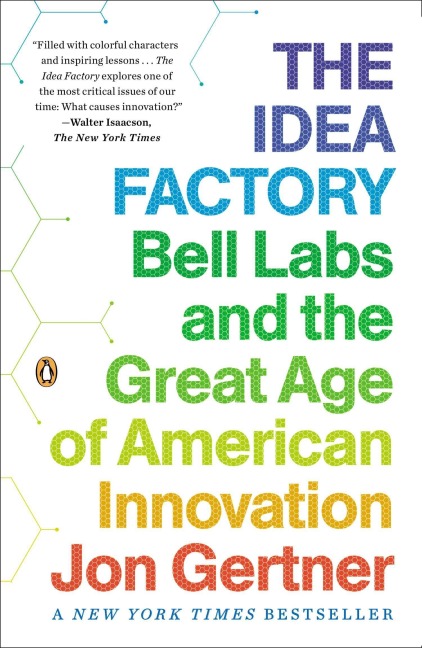
The Idea Factory: Bell Labs and the Great Age of American Innovation
-20% with code BOOKS
In stock at our supplier
TOP

Flowers For Algernon: A Modern Literary Classic
-20% with code BOOKS
In stock at our supplier
TOP

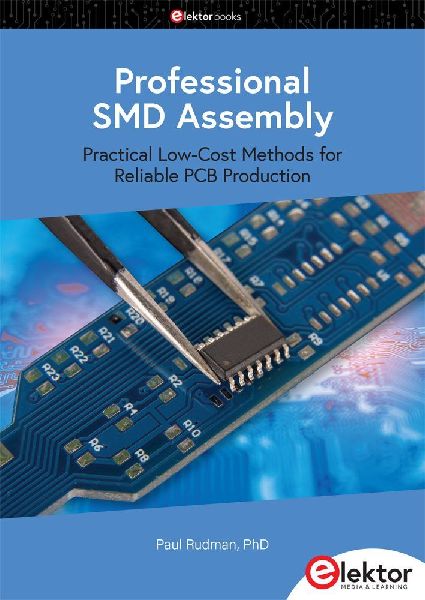
Professional SMD Assembly: Practical Low-Cost Methods for Reliable PCB Production
-20% with code BOOKS
In stock at our supplier
TOP

Blood in the Machine: The Origins of the Rebellion Against Big Tech
-20% with code BOOKS
In stock at our supplier
 TOP
TOP
Learning the Art of Electronics: A Hands-On Lab Course
Thomas C. Hayes, Paul Horowitz, David Abrams
-20% with code BOOKS
In stock at our supplier
Description
Concurrent data structures simplify the development of concurrent programs by encapsulating commonly used mechanisms for synchronization and commu nication into data structures. This thesis develops a notation for describing concurrent data structures, presents examples of concurrent data structures, and describes an architecture to support concurrent data structures. Concurrent Smalltalk (CST), a derivative of Smalltalk-80 with extensions for concurrency, is developed to describe concurrent data structures. CST allows the programmer to specify objects that are distributed over the nodes of a concurrent computer. These distributed objects have many constituent objects and thus can process many messages simultaneously. They are the foundation upon which concurrent data structures are built. The balanced cube is a concurrent data structure for ordered sets. The set is distributed by a balanced recursive partition that maps to the subcubes of a binary 7lrcube using a Gray code. A search algorithm, VW search, based on the distance properties of the Gray code, searches a balanced cube in O(log N) time. Because it does not have the root bottleneck that limits all tree-based data structures to 0(1) concurrency, the balanced cube achieves 0C.:N) con currency. Considering graphs as concurrent data structures, graph algorithms are pre sented for the shortest path problem, the max-flow problem, and graph parti tioning. These algorithms introduce new synchronization techniques to achieve better performance than existing algorithms.
More Information
| Author | J. W. Dally |
|---|---|
| Publisher | Springer US |
| Series | The Springer International Series in Engineering and Computer Science |
| Release year | 1987 |
| Cover type | Hardcover |
| EAN | 9780898382358 |