
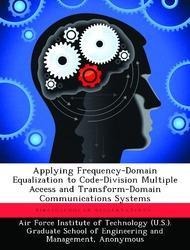
Applying Frequency-Domain Equalization to Code-Division Multiple Access and Transform-Domain Communications Systems - Alfred A. Tamayo
-20% with code BOOKS
30-day return policy
This research examined the theory and application of using discrete multi-tone (DMT) frequency-domain equalization (FEQ) with communications systems that inherently posses null-tones in their respective transmission frequencies. DMT-FEQ relies on null-tones to equalize a non-ideal channel. A Hadamard encoded code division multiple access (CDMA) communications system with up to 32 synchronous users nd a tran ... Full description
You May Also Like
 TOP
TOP

The Culture Map: Breaking Through the Invisible Boundaries of Global Business
-20% with code BOOKS
In stock
TOP

Atomic Habits: An Easy & Proven Way to Build Good Habits & Break Bad Ones
-20% with code BOOKS
In stock
TOP


The Nord Stream Conspiracy: The Inside Story of the Explosions That Shook the World
-20% with code BOOKS
In stock at our supplier
 TOP
TOP

Women Who Run with the Wolves: Myths and Stories of the Wild Woman Archetype
Clarissa Pinkola Estés, Clarissa Pinkola Estes
-20% with code BOOKS
In stock at our supplier
TOP
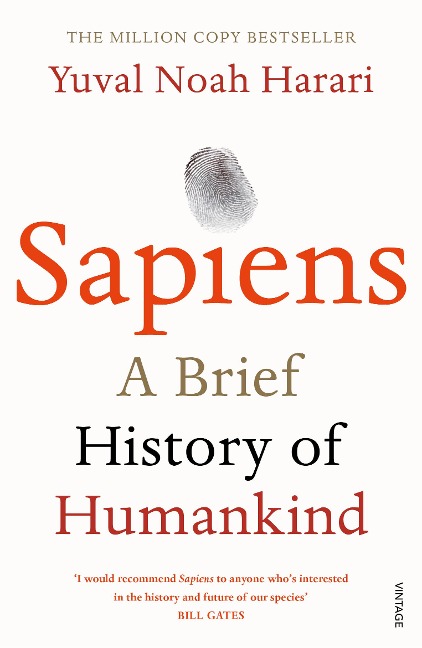
Sapiens: A Brief History of Humankind
-20% with code BOOKS
In stock at our supplier
TOP
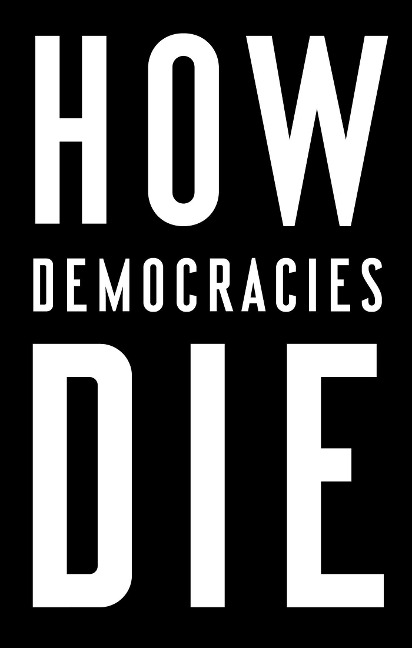
How Democracies Die
Steven Levitsky, Daniel Ziblatt
-20% with code BOOKS
In stock at our supplier
TOP

Prisoners of Geography: Updated 10th Anniversary Edition: Ten Maps That Tell You Everything You Need To Know About Global Politics
-20% with code BOOKS
In stock at our supplier
TOP

Classic Football Shirts
Classic Football Shirts, Rory Smith
-20% with code BOOKS
In stock at our supplier
 TOP
TOP

The Whole-Brain Child: 12 Revolutionary Strategies to Nurture Your Child's Developing Mind
Daniel J. Siegel, Tina Payne Bryson
-20% with code BOOKS
In stock at our supplier
 TOP
TOP

Everything I Know About Love: Now a Major BBC One Series
-20% with code BOOKS
In stock
TOP

Braiding Sweetgrass: Indigenous Wisdom, Scientific Knowledge and the Teachings of Plants
-20% with code BOOKS
In stock at our supplier
TOP

The Unabridged Journals of Sylvia Plath
-20% with code BOOKS
In stock at our supplier
 TOP
TOP

To Kill a Mockingbird. 60th Anniversary Edition
-20% with code BOOKS
In stock at our supplier
 TOP
TOP

The Testaments: The Sequel to The Handmaid's Tale
-20% with code BOOKS
In stock at our supplier
TOP

Caliban and the Witch: Women, the Body and Primitive Accumulation
-20% with code BOOKS
In stock at our supplier
Description
This research examined the theory and application of using discrete multi-tone (DMT) frequency-domain equalization (FEQ) with communications systems that inherently posses null-tones in their respective transmission frequencies. DMT-FEQ relies on null-tones to equalize a non-ideal channel. A Hadamard encoded code division multiple access (CDMA) communications system with up to 32 synchronous users nd a transform domain communications system TDCS) with one user were investigated. Both communications systems were stimulated while operating with real channel data corrupted by noise. Simulation results showed that the Hadamard encoded CDMA system worked well with DMT-FEQ only when the transmission signal obeyed DMT-FEQ null-tone conditions in conjuction with a vector estimation method. Simulation results also showed that modifications to TDCS with a conjugate-symmetric phase component in conjunction with a modified spectral mask with consecutive null-tones and forced null-tones provided acceptable results when equalizing with DMT-FEQ.
More Information
| Author | Alfred A. Tamayo |
|---|---|
| Publisher | Creative Media Partners, LLC |
| Release year | 2012 |
| Cover type | Softcover |
| EAN | 9781249449805 |