
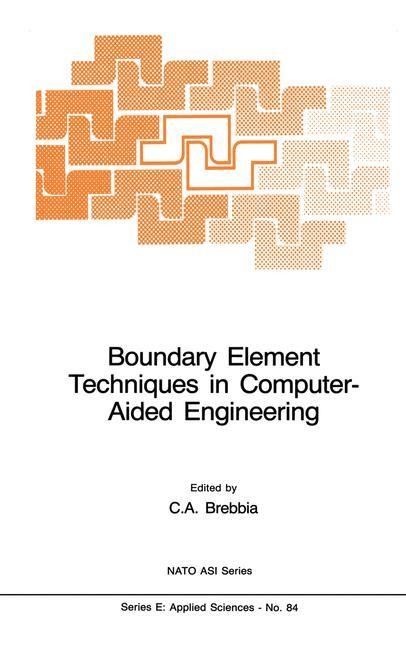
Boundary Element Techniques in Computer-Aided Engineering -
-20% with code BOOKS
Shipping in 17-23 days
30-day return policy
This book constitutes the edited proceedings of the Advanced Studies Institute on Boundary Element Techniques in Computer Aided Engineering held at The Institute of Computational Mechanics, Ashurst Lodge, Southampton, England, from September 19 to 30, 1984. The Institute was held under the auspices of the newly launched "Double Jump Programme" which aims to bring together academics and industrial scientists ... Full description
You May Also Like
 TOP
TOP

Biology: A Global Approach, Global Edition
Neil Campbell, Rebecca Orr, Lisa Urry, Peter Minorsky, Michael Cain, Jane Reece, Steven Wasserman
-20% with code BOOKS
In stock at our supplier
TOP

Six Not-so-easy Pieces: Einstein's Relativity, Symmetry, and Space-Time
Richard P. Feynman, Robert B. Leighton, Matthew Sands
-20% with code BOOKS
In stock at our supplier
TOP

Determined: The Science of Life Without Free Will
-20% with code BOOKS
In stock at our supplier
 TOP
TOP


The Age of Alchemy: How Early Innovators Shaped Modern Chemistry
-20% with code BOOKS
In stock at our supplier
TOP

The Secrets of our DNA: How Genetics has Changed the World
-20% with code BOOKS
In stock at our supplier
TOP

Janeway's Immunobiology
Leslie J. Berg, Kenneth Murphy, Casey Weaver
-20% with code BOOKS
In stock at our supplier
TOP

Why We Sleep: Unlocking the Power of Sleep and Dreams
-20% with code BOOKS
In stock
TOP

The Light Eaters: How the Unseen World of Plant Intelligence Offers a New Understanding of Life on Earth
-20% with code BOOKS
In stock at our supplier
TOP

Six Easy Pieces: Essentials of Physics Explained by Its Most Brilliant Teacher
Richard P. Feynman, Robert B. Leighton, Matthew Sands
-20% with code BOOKS
In stock at our supplier
TOP

The Rise and Fall of the Dinosaurs: A New History of a Lost World
-20% with code BOOKS
In stock at our supplier
TOP
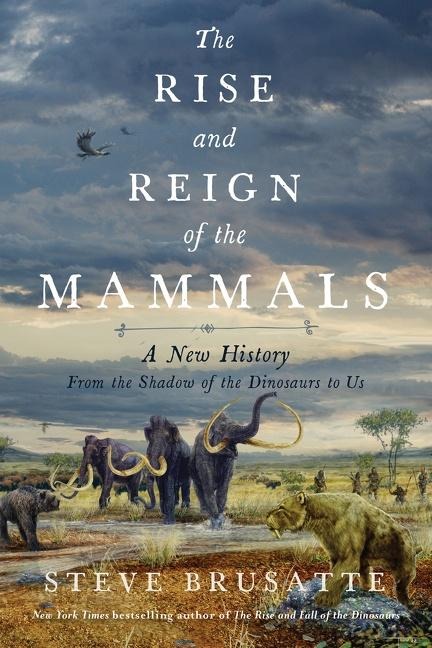
The Rise and Reign of the Mammals: A New History, from the Shadow of the Dinosaurs to Us
-20% with code BOOKS
In stock at our supplier
TOP
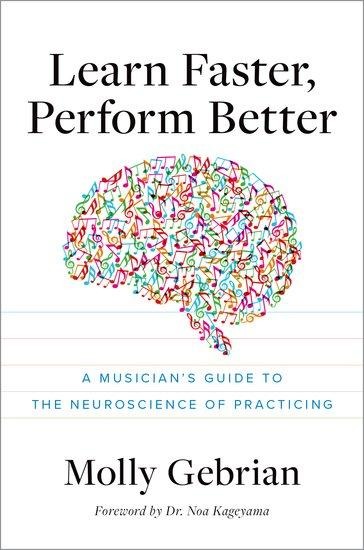
Learn Faster, Perform Better: A Musician's Guide to the Neuroscience of Practicing
-20% with code BOOKS
In stock at our supplier
TOP
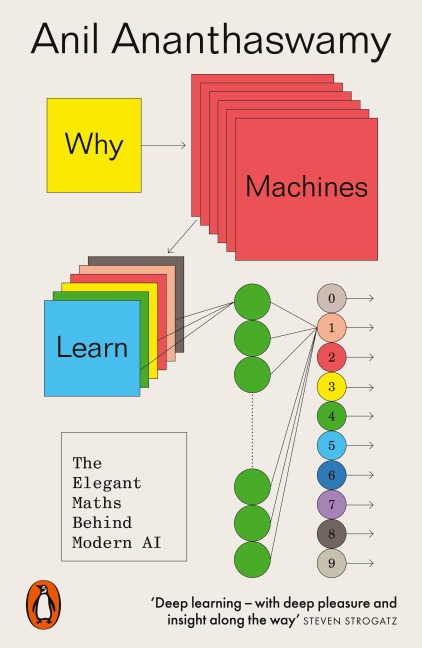
Why Machines Learn: The Elegant Maths Behind Modern AI
-20% with code BOOKS
In stock at our supplier
TOP

Beyond Inheritance: Our Ever-Mutating Cells and a New Understanding of Health
-20% with code BOOKS
In stock at our supplier
 TOP
TOP

The Feynman Lectures on Physics. The New Millennium Edition
Matthew Sands, Robert Leighton, Richard Feynman
-20% with code BOOKS
In stock at our supplier
TOP

How to Solve it: A New Aspect of Mathematical Method
-20% with code BOOKS
In stock at our supplier
TOP

Thing Explainer: Complicated Stuff in Simple Words
-20% with code BOOKS
In stock at our supplier
TOP

Behave: The Biology of Humans at Our Best and Worst
-20% with code BOOKS
In stock at our supplier
Description
This book constitutes the edited proceedings of the Advanced Studies Institute on Boundary Element Techniques in Computer Aided Engineering held at The Institute of Computational Mechanics, Ashurst Lodge, Southampton, England, from September 19 to 30, 1984. The Institute was held under the auspices of the newly launched "Double Jump Programme" which aims to bring together academics and industrial scientists. Consequently the programme was more industr ially based than other NATO ASI meetings, achieving an excellent combination of theoretical and practical aspects of the newly developed Boundary Element Method. In recent years engineers have become increasingly interested in the application of boundary element techniques for'the solution of continuum mechanics problems. The importance of boundary elements is that it combines the advantages of boundary integral equations (i.e. reduction of dimensionality of the problems, possibility of modelling domains extending to infinity, numerical accura'cy) with the versatility of finite elements (i.e. modelling of arbitrary curved surfaces). Because of this the technique has been well received by the engineering and scientific communities. Another important advantage of boundary elements stems from its reduction of dimensionality, that is that the technique requires much less data input than classical finite elements. This makes the method very well suited for Computer Aided Design and in great part explains the interest of the engineering profession in the new technique.
More Information
| Publisher | Springer Netherlands |
|---|---|
| Series | NATO Science Series E: |
| Release year | 1984 |
| Cover type | Hardcover |
| EAN | 9789024730650 |