
Combinatorial Peptide Library Protocols -

-20% with code BOOKS
Shipping in 17-23 days
30-day return policy
During the course of evolution, an imbalance was created between the rate of vertebrate genetic adaptation and that of the lower forms of living organisms, such as bacteria and viruses. This imbalance has given the latter the advantage of generating, relatively quickly, molecules with unexpected structures and features that carry a threat to vertebrates. To compensate for their weakness, vertebrates have ac ... Full description
You May Also Like
 TOP
TOP
Biology: A Global Approach, Global Edition
Neil Campbell, Rebecca Orr, Lisa Urry, Peter Minorsky, Michael Cain, Jane Reece, Steven Wasserman
-20% with code BOOKS
In stock at our supplier
TOP

Six Not-so-easy Pieces: Einstein's Relativity, Symmetry, and Space-Time
Richard P. Feynman, Robert B. Leighton, Matthew Sands
-20% with code BOOKS
In stock at our supplier
TOP

Determined: The Science of Life Without Free Will
-20% with code BOOKS
In stock at our supplier
 TOP
TOP

The Age of Alchemy: How Early Innovators Shaped Modern Chemistry
-20% with code BOOKS
In stock at our supplier
TOP
The Secrets of our DNA: How Genetics has Changed the World
-20% with code BOOKS
In stock at our supplier
TOP

Janeway's Immunobiology
Leslie J. Berg, Kenneth Murphy, Casey Weaver
-20% with code BOOKS
In stock at our supplier
TOP
Why We Sleep: Unlocking the Power of Sleep and Dreams
-20% with code BOOKS
In stock
TOP
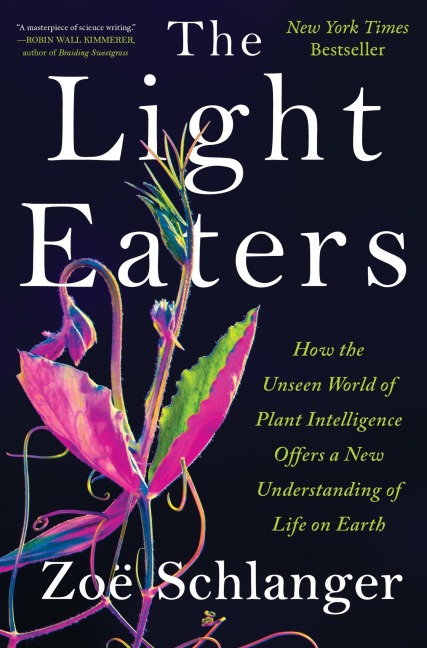
The Light Eaters: How the Unseen World of Plant Intelligence Offers a New Understanding of Life on Earth
-20% with code BOOKS
In stock at our supplier
TOP

Six Easy Pieces: Essentials of Physics Explained by Its Most Brilliant Teacher
Richard P. Feynman, Robert B. Leighton, Matthew Sands
-20% with code BOOKS
In stock at our supplier
TOP
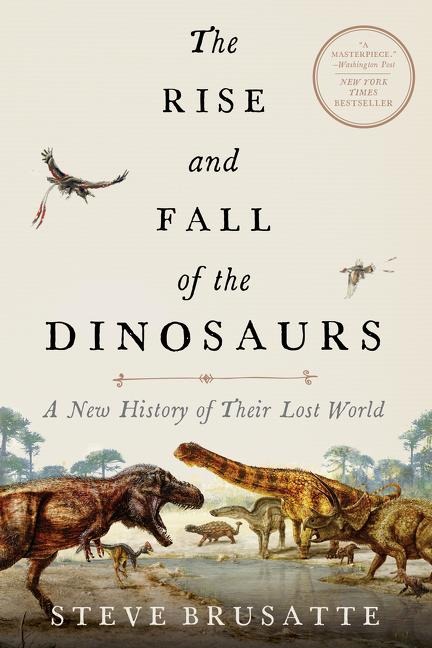
The Rise and Fall of the Dinosaurs: A New History of a Lost World
-20% with code BOOKS
In stock at our supplier
TOP
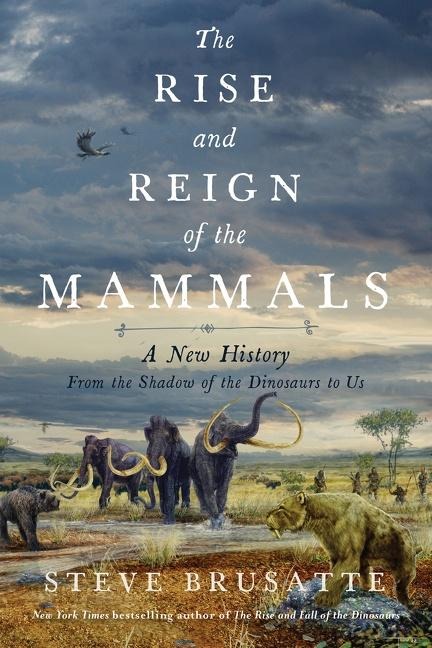
The Rise and Reign of the Mammals: A New History, from the Shadow of the Dinosaurs to Us
-20% with code BOOKS
In stock at our supplier
TOP
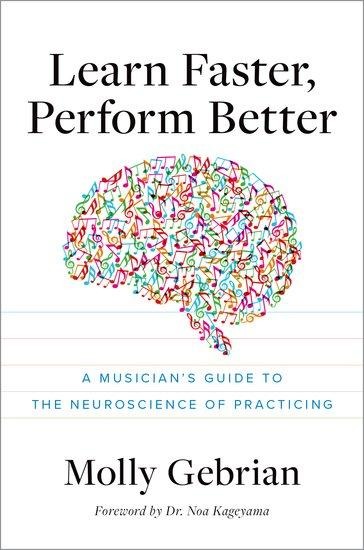
Learn Faster, Perform Better: A Musician's Guide to the Neuroscience of Practicing
-20% with code BOOKS
In stock at our supplier
TOP
Why Machines Learn: The Elegant Maths Behind Modern AI
-20% with code BOOKS
In stock at our supplier
TOP

Beyond Inheritance: Our Ever-Mutating Cells and a New Understanding of Health
-20% with code BOOKS
In stock at our supplier
 TOP
TOP

The Feynman Lectures on Physics. The New Millennium Edition
Matthew Sands, Robert Leighton, Richard Feynman
-20% with code BOOKS
In stock at our supplier
TOP

How to Solve it: A New Aspect of Mathematical Method
-20% with code BOOKS
In stock at our supplier
TOP

Thing Explainer: Complicated Stuff in Simple Words
-20% with code BOOKS
In stock at our supplier
TOP
Behave: The Biology of Humans at Our Best and Worst
-20% with code BOOKS
In stock at our supplier
Description
During the course of evolution, an imbalance was created between the rate of vertebrate genetic adaptation and that of the lower forms of living organisms, such as bacteria and viruses. This imbalance has given the latter the advantage of generating, relatively quickly, molecules with unexpected structures and features that carry a threat to vertebrates. To compensate for their weakness, vertebrates have accelerated their own evolutionary processes, not at the level of whole organism, but in specialized cells containing the genes that code for antibody molecules or for T-cell receptors. That is, when an immediate requirement for molecules capable of specific interactions arose, nature has preferred to speed up the mode of Darwinian evolution in pref- ence to any other approach (such as the use of X-ray diffraction studies and computergraphic analysis). Recently, Darwinian rules have been adapted for test tube research, and the concept of selecting molecules having particular characteristics from r- dom pools has been realized in the form of various chemical and biological combinatorial libraries. While working with these libraries, we noticed the interesting fact that when combinatorial libraries of oligopeptides were allowed to interact with different selector proteins, only the actual binding sites of these proteins showed binding properties, whereas the rest of the p- tein surface seemed "inert. " This seemingly common feature of protein- having no extra potential binding sites--was probably selected during evolution in order to minimize nonspecific interactions with the surrounding milieu.
More Information
| Publisher | Humana Press |
|---|---|
| Series | Methods in Molecular Biology |
| Release year | 1997 |
| Cover type | Hardcover |
| EAN | 9780896033924 |