
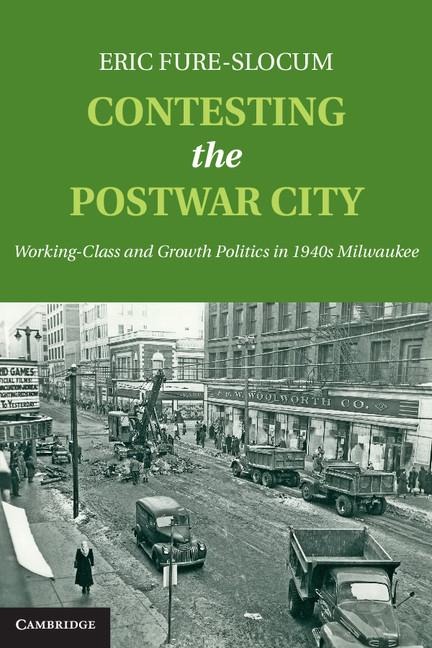
Contesting the Postwar City - Eric Fure-Slocum
-20% with code BOOKS
Shipping in 17-23 days
30-day return policy
Review"Eric Fure-Slocum takes an in-depth look at thepolitics and public life of 1940s Milwaukee. He resurrects the history oflong-forgotten struggles over public entertainment, housing shortages, anddowntown modernization, and uses them to illustrate two very different visionsof postwar urban development: what he calls "working-class" versus"growth" politics. Related analyses should be written for many USc ... Full description
You May Also Like
 TOP
TOP

An African History of Africa: From the Dawn of Humanity to Independence
-20% with code BOOKS
In stock at our supplier
 TOP
TOP

A People's History of the United States
-20% with code BOOKS
In stock at our supplier
TOP
The Notebook: A History of Thinking on Paper
-20% with code BOOKS
In stock at our supplier
TOP
We the People: A History of the U.S. Constitution
-20% with code BOOKS
In stock at our supplier
 TOP
TOP

The Hundred Years' War on Palestine: A History of Settler Colonial Conquest and Resistance
-20% with code BOOKS
In stock at our supplier
TOP
Eichmann in Jerusalem: A Report on the Banality of Evil
-20% with code BOOKS
In stock at our supplier
TOP

A History of the World in 47 Borders: The Stories Behind the Lines on Our Maps
-20% with code BOOKS
In stock at our supplier
 TOP
TOP
From Third World to First: Singapore and the Asian Economic Boom
-20% with code BOOKS
In stock at our supplier
TOP

Bloodlands: Europe Between Hitler and Stalin
-20% with code BOOKS
In stock at our supplier
TOP
The Dawn of Everything: A New History of Humanity
-20% with code BOOKS
In stock at our supplier
TOP


Chip War: The Fight for the World's Most Critical Technology
-20% with code BOOKS
In stock
TOP

A Short History of America: From Tea Party to Trump
-20% with code BOOKS
In stock at our supplier
TOP
Babylon: The Mother of All Cities, from the critically acclaimed ancient historian and author of The Persians
-20% with code BOOKS
In stock at our supplier
TOP

Man's Search For Meaning: The classic tribute to hope from the Holocaust
-20% with code BOOKS
In stock at our supplier
TOP
The Sleepwalkers: How Europe Went to War in 1914
-20% with code BOOKS
In stock at our supplier
TOP
In Search Of Berlin: The Story of Europe's Most Important City
-20% with code BOOKS
In stock at our supplier

Description
More Information
| Author | Eric Fure-Slocum |
|---|---|
| Publisher | Cambridge University Press |
| Release year | 2013 |
| Cover type | Hardcover |
| EAN | 9781107036352 |