
Cooperative Control and Optimization -

-20% with code BOOKS
Shipping in 12-18 days
30-day return policy
A cooperative system is defined to be multiple dynamic entities that share information or tasks to accomplish a common, though perhaps not singular, objective. Examples of cooperative control systems might include: robots operating within a manufacturing cell, unmanned aircraft in search and rescue operations or military surveillance and attack missions, arrays of micro satellites that form a distributed la ... Full description
You May Also Like
 TOP
TOP

The Demon-Haunted World: Science as a Candle in the Dark
-20% with code BOOKS
In stock at our supplier
TOP

Heart Rate Variability: Science and Strategies for Peak Performance
Marco Altini, Sylvain Laborde, Dan Plews, Emma Mosley
-20% with code BOOKS
Out of stock
TOP

Many Faces, One Purpose: A Manager's Handbook on Women in Firefighting
U. S. Fire Administration, Homeland Security
-20% with code BOOKS
Out of stock
TOP

The Gulf Moment: Arab Relations Since 2011
Florence Gaub, U. S. Army War College, Strategic Studies Institute
-20% with code BOOKS
Out of stock
 TOP
TOP

Introduction to Algorithms
Ronald L. Rivest, Charles E. Leiserson, Clifford Stein, Thomas H. Cormen
-20% with code BOOKS
In stock at our supplier
TOP

Thinking in Systems: International Bestseller
-20% with code BOOKS
In stock at our supplier
TOP

101 Things I Learned in Architecture School
-20% with code BOOKS
In stock at our supplier
TOP

Skin in the Game: Hidden Asymmetries in Daily Life
-20% with code BOOKS
In stock at our supplier
TOP

Dinosaurs and Prehistoric Life: The Definitive Visual Guide to Prehistoric Animals
-20% with code BOOKS
In stock at our supplier
TOP

International Economics: Theory and Policy, Global Edition
Paul Krugman, Maurice Obstfeld, Marc Melitz
-20% with code BOOKS
In stock at our supplier
TOP

Nudge: Improving Decisions About Health, Wealth and Happiness
Cass R Sunstein, Richard H. Thaler
-20% with code BOOKS
In stock
TOP


Crossing Borders: About the birth of the Consortium of European Research Libraries, the organisation's early years and its path to maturity, spanning the period from the late twentieth century to the first decades of the twenty-first century
-20% with code BOOKS
In stock at our supplier
TOP

The Code Book: The Science of Secrecy from Ancient Egypt to Quantum Cryptography
-20% with code BOOKS
In stock at our supplier

Cybernetics: Second Edition: Or the Control and Communication in the Animal and the Machine
-20% with code BOOKS
In stock at our supplier
 TOP
TOP
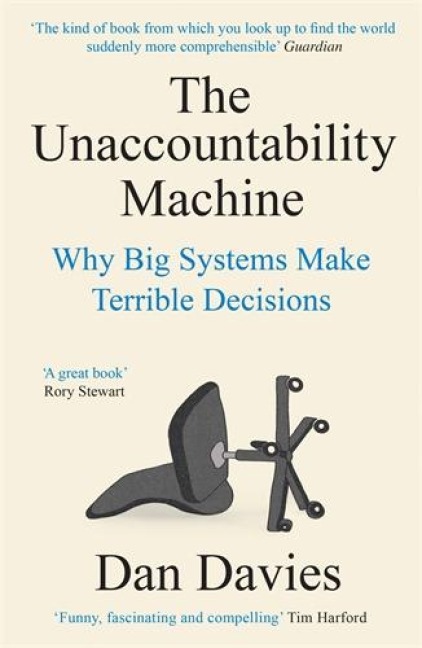
The Unaccountability Machine: Why Big Systems Make Terrible Decisions
-20% with code BOOKS
In stock at our supplier
TOP

Only Dull People Are Brilliant at Breakfast
-20% with code BOOKS
In stock at our supplier
TOP

The Dictionary of Obscure Sorrows
-20% with code BOOKS
In stock at our supplier
TOP

Einhundert Zitate Female Edition: Ein Postkartenbuch mit 100 Zitaten
-20% with code BOOKS
In stock at our supplier
Description
A cooperative system is defined to be multiple dynamic entities that share information or tasks to accomplish a common, though perhaps not singular, objective. Examples of cooperative control systems might include: robots operating within a manufacturing cell, unmanned aircraft in search and rescue operations or military surveillance and attack missions, arrays of micro satellites that form a distributed large aperture radar, employees operating within an organization, and software agents. The term entity is most often associated with vehicles capable of physical motion such as robots, automobiles, ships, and aircraft, but the definition extends to any entity concept that exhibits a time dependent behavior. Critical to cooperation is communication, which may be accomplished through active message passing or by passive observation. It is assumed that cooperation is being used to accomplish some common purpose that is greater than the purpose of each individual, but we recognize that the individual may have other objectives as well, perhaps due to being a member of other caucuses. This implies that cooperation may assume hierarchical forms as well. The decision-making processes (control) are typically thought to be distributed or decentralized to some degree. For if not, a cooperative system could always be modeled as a single entity. The level of cooperation may be indicated by the amount of information exchanged between entities. Cooperative systems may involve task sharing and can consist of heterogeneous entities. Mixed initiative systems are particularly interesting heterogeneous systems since they are composed of humans and machines. Finally, one is often interested in how cooperative systems perform under noisy or adversary conditions. In December 2000, the Air Force Research Laboratory and the University of Florida successfully hosted the first Workshop on Cooperative Control and Optimization in Gainesville, Florida. This bookcontains selected refereed papers summarizing the participants' research in control and optimization of cooperative systems. Audience: Faculty, graduate students, and researchers in optimization and control, computer sciences and engineering.
More Information
| Publisher | Springer US |
|---|---|
| Series | Applied Optimization |
| Release year | 2010 |
| Cover type | Softcover |
| EAN | 9781441952172 |