
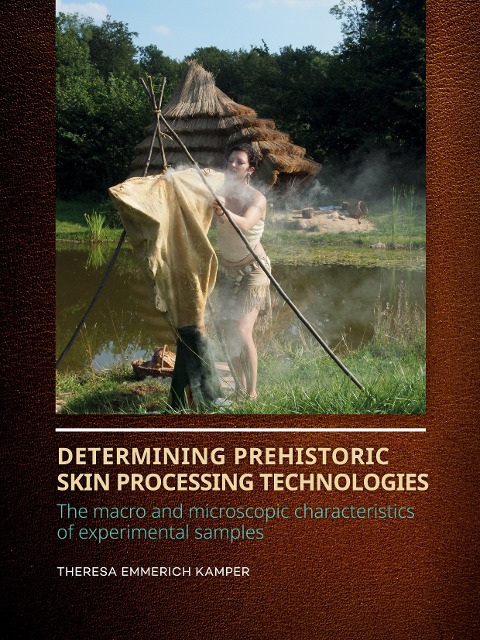
Determining Prehistoric Skin Processing Technologies - Theresa Emmerich Kamper
-20% with code BOOKS
Shipping in 15-21 days
30-day return policy
The importance of skin processing technologies in the history and expansion of humankind cannot be overstated, yet these technologies can be difficult to identify in the archaeological record. This research outlines the development of a systematic, non-destructive method for identifying the tanning technologies used to produce prehistoric skin artefacts. The approach combines extensive archaeological resear ... Full description
You May Also Like
 TOP
TOP

An African History of Africa: From the Dawn of Humanity to Independence
-20% with code BOOKS
In stock at our supplier
 TOP
TOP

A People's History of the United States
-20% with code BOOKS
In stock at our supplier
TOP

The Notebook: A History of Thinking on Paper
-20% with code BOOKS
In stock at our supplier
TOP

We the People: A History of the U.S. Constitution
-20% with code BOOKS
In stock at our supplier
 TOP
TOP

The Hundred Years' War on Palestine: A History of Settler Colonial Conquest and Resistance
-20% with code BOOKS
In stock at our supplier
TOP

Eichmann in Jerusalem: A Report on the Banality of Evil
-20% with code BOOKS
In stock at our supplier
TOP

A History of the World in 47 Borders: The Stories Behind the Lines on Our Maps
-20% with code BOOKS
In stock at our supplier
 TOP
TOP

From Third World to First: Singapore and the Asian Economic Boom
-20% with code BOOKS
In stock at our supplier
TOP

Bloodlands: Europe Between Hitler and Stalin
-20% with code BOOKS
In stock at our supplier
TOP

The Dawn of Everything: A New History of Humanity
-20% with code BOOKS
In stock at our supplier
TOP


Chip War: The Fight for the World's Most Critical Technology
-20% with code BOOKS
In stock
TOP

A Short History of America: From Tea Party to Trump
-20% with code BOOKS
In stock at our supplier
TOP

Man's Search For Meaning: The classic tribute to hope from the Holocaust
-20% with code BOOKS
In stock at our supplier
TOP

The Sleepwalkers: How Europe Went to War in 1914
-20% with code BOOKS
In stock at our supplier
TOP

In Search Of Berlin: The Story of Europe's Most Important City
-20% with code BOOKS
In stock at our supplier
 TOP
TOP

Ordinary Men: Reserve Police Battalion 101 and the Final Solution in Poland
-20% with code BOOKS
In stock at our supplier
Description
The importance of skin processing technologies in the history and expansion of humankind cannot be overstated, yet these technologies can be difficult to identify in the archaeological record. This research outlines the development of a systematic, non-destructive method for identifying the tanning technologies used to produce prehistoric skin artefacts. The approach combines extensive archaeological research and over 25 years of the author¿s personal tanning experience. The method employs observations of an extensive sample reference collection, both macroscopic and microscopic, to produce a database of defining characteristics for six tannage types, from a large geographic area and time frame. The primary collection contains 22 species identified as economically important from both Europe and North America. A secondary collection of clothing and utilitarian items, made from traditionally processed skins, was used to add ¿in-life use¿ traces to the database. The method was tested against both archaeological items from a variety of preservation contexts, and ethnographic items from museum collections across North America and Europe. This analysis confirmed that defining characteristics do exist between the primary tannage technologies, and that at least some defining characteristics survived in all preservation contexts. These can be recorded at multiple levels of observation, and often provide insight into small sections of the artefact¿s production sequence and life history. This research shows definitively that processed skin items from vastly different preservation contexts can provide a wealth of information about prehistoric tannage technologies, as well as information on manufacturing sequences and the conditions of use an item experienced. The method is a valuable analytical tool for those involved in conservation, curation or analysis of archaeological or ethnographic skin products. It provides a consolidated source of information for artisans working with traditional tanning, or re-enactors interested in the history or science of skin products. Finally, it serves as an example of the targeted use of experimental archaeology in a large-scale research project, and will be beneficial to anyone involved in experimental or experiential archaeology. Contents Preface Chapter 1: Connecting disciplines and traditions in archaeological skin processing Chapter 2: Methodologies for investigating early tanning technologies Chapter 3: Rationale for faunal selection Chapter 4: Methodology for chosen tanning technologies Chapter 5: Analysis of experimental reference sample collection Chapter 6: Collection analysis by tannage: Interpretation of results Chapter 7: Identification of in-life use traces Chapter 8: Tying it all together: discriminating traits by tannage type Chapter 9: Discussion and conclusions Appendices Glossary Bibliography
More Information
| Author | Theresa Emmerich Kamper |
|---|---|
| Publisher | Sidestone Press Dissertations |
| Release year | 2020 |
| Cover type | Softcover |
| EAN | 9789088908361 |