
Fuzzy Quantifiers: A Computational Theory - Ingo Glöckner
-20% with code BOOKS
Shipping in 17-23 days
30-day return policy
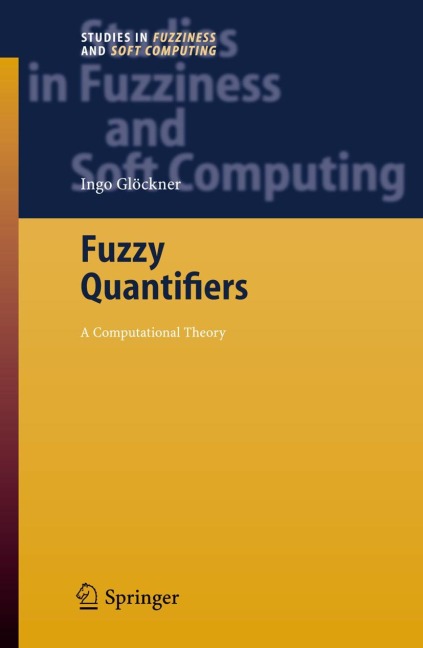
From a linguistic perspective, it is quanti?cation which makes all the di?- ence between ¿having no dollars¿ and ¿having a lot of dollars¿. And it is the meaning of the quanti?er ¿most¿ which eventually decides if ¿Most Ame- cans voted Kerry¿ or ¿Most Americans voted Bush¿ (as it stands). Natural language(NL)quanti?erslike¿all¿,¿almostall¿,¿many¿etc. serveanimp- tant purpose because they permit us to speak ... Full description
You May Also Like
 TOP
TOP

Talk To Me In Korean Workbook - Level 1: New Edition
-20% with code BOOKS
In stock at our supplier
TOP
The Elements of Style - Illustrated
-20% with code BOOKS
In stock at our supplier
TOP

Sejong Korean Vocabulary and Grammar 1A
-20% with code BOOKS
In stock at our supplier
TOP

Paperback Oxford English Dictionary
-20% with code BOOKS
In stock at our supplier
TOP

Das Oxford Schulwörterbuch A2-B1: Englisch - Deutsch / Deutsch - Englisch
-20% with code BOOKS
In stock at our supplier
 TOP
TOP
The Elements of Eloquence: How To Turn the Perfect English Phrase
-20% with code BOOKS
In stock at our supplier
TOP

Sejong Korean Student Book 1B - English Edition: Free MP3 Download
-20% with code BOOKS
In stock at our supplier
TOP

How to Talk to Anyone: 92 Little Tricks for Big Success in Relationships
-20% with code BOOKS
In stock
TOP

Korean Grammar in Use - Beginning to Intermediate: Free MP3 Audio Download
Jean-myung Ahn, Kyung-ah Lee, Hoo-young Han
-20% with code BOOKS
In stock at our supplier
 TOP
TOP

Point it: Traveller's language kit. Bildwörterbuch
-20% with code BOOKS
In stock at our supplier
TOP

Sejong Korean Student Book 1A - English Edition: Free MP3 Download
-20% with code BOOKS
In stock at our supplier
TOP


Context - Schwerpunktthema Abitur Englisch - Pflichtmaterialien Abitur Niedersachsen 2028 - Textheft - Zu allen Materialien für das grundlegende und erhöhte Niveau: Pflichtmaterialien Abitur Niedersachsen 2028 - Textheft - Zu allen Materialien für das gru
Claudia Krapp, Wiebke Bettina Dietrich, Lars Schüler, Eva Runge, Peter Hohwiller
-20% with code BOOKS
In stock at our supplier
TOP

Das große Oxford Wörterbuch: Englisch-Deutsch / Deutsch-Englisch - Mit beigelegtem Exam Trainer
-20% with code BOOKS
In stock at our supplier
TOP

Sejong Korean Vocabulary and Grammar 1B
-20% with code BOOKS
In stock at our supplier
TOP

Bird by Bird: Some Instructions on Writing and Life
-20% with code BOOKS
In stock at our supplier
TOP
Compact Oxford Russian Dictionary
-20% with code BOOKS
In stock at our supplier
TOP
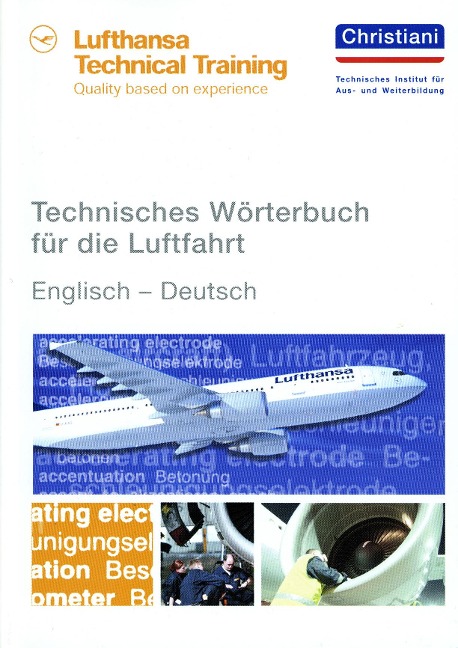
Technisches Wörterbuch für die Luftfahrt: Englisch - Deutsch
-20% with code BOOKS
In stock at our supplier
TOP
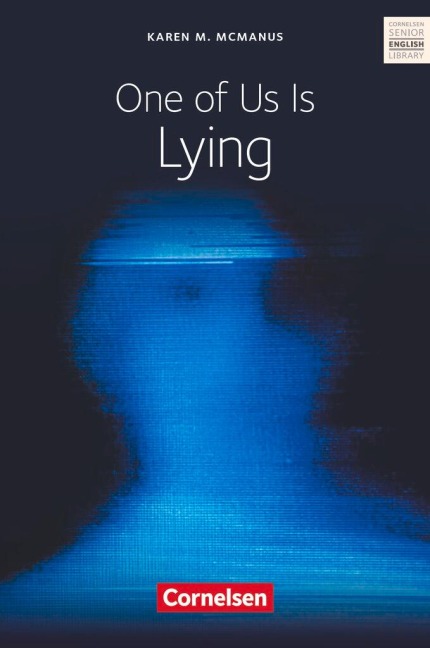
One of Us Is Lying: Ab dem 10. Schuljahr. Textband mit Annotationen.
-20% with code BOOKS
In stock at our supplier
Description
From a linguistic perspective, it is quanti?cation which makes all the di?- ence between ¿having no dollars¿ and ¿having a lot of dollars¿. And it is the meaning of the quanti?er ¿most¿ which eventually decides if ¿Most Ame- cans voted Kerry¿ or ¿Most Americans voted Bush¿ (as it stands). Natural language(NL)quanti?erslike¿all¿,¿almostall¿,¿many¿etc. serveanimp- tant purpose because they permit us to speak about properties of collections, as opposed to describing speci?c individuals only; in technical terms, qu- ti?ers are a ¿second-order¿ construct. Thus the quantifying statement ¿Most Americans voted Bush¿ asserts that the set of voters of George W. Bush c- prisesthemajorityofAmericans,while¿Bushsneezes¿onlytellsussomething about a speci?c individual. By describing collections rather than individuals, quanti?ers extend the expressive power of natural languages far beyond that of propositional logic and make them a universal communication medium. Hence language heavily depends on quantifying constructions. These often involve fuzzy concepts like ¿tall¿, and they frequently refer to fuzzy quantities in agreement like ¿about ten¿, ¿almost all¿, ¿many¿ etc. In order to exploit this expressive power and make fuzzy quanti?cation available to technical applications, a number of proposals have been made how to model fuzzy quanti?ers in the framework of fuzzy set theory. These approaches usually reduce fuzzy quanti?cation to a comparison of scalar or fuzzy cardinalities [197, 132].
More Information
| Author | Ingo Glöckner |
|---|---|
| Publisher | Springer Berlin Heidelberg |
| Series | Studies in Fuzziness and Soft Computing |
| Release year | 2006 |
| Cover type | Hardcover |
| EAN | 9783540296348 |