
Genetic Engineering: Principles and Methods -

-20% with code BOOKS
Shipping in 17-23 days
30-day return policy
Over the past decade, our laboratory and others have been concerned with molecular archaeological studies aimed at revealing the origins and evolutionary histories of permeases (1). These studies have revealed that several different families, defined on the basis of sequence similarities, arose independently of each other, at different times in evolutionary history, following different routes. When complete ... Full description
You May Also Like
 TOP
TOP

The Myth of Normal: Trauma, Illness, and Healing in a Toxic Culture
-20% with code BOOKS
In stock
TOP
No Bad Parts: Healing Trauma and Restoring Wholeness with the Internal Family Systems Model
-20% with code BOOKS
In stock at our supplier
TOP

Maybe You Should Talk to Someone: a therapist, her thearapist, and our lives revealed
-20% with code BOOKS
In stock at our supplier
TOP

On Connection: 'Powerful' MATT HAIG
-20% with code BOOKS
In stock at our supplier
TOP

The Checklist Manifesto: How to Get Things Right
-20% with code BOOKS
In stock at our supplier
TOP

Aids to the Examination of the Peripheral Nervous System
-20% with code BOOKS
In stock at our supplier
TOP
Harrison's Principles of Internal Medicine (Vol.1 & Vol.2)
Stephen Hauser, Joseph Loscalzo, Steven Holland, Dan Longo, J. Larry Jameson, Dennis Kasper, Carol Langford, Anthony Fauci
-20% with code BOOKS
In stock at our supplier
TOP

The Body Keeps the Score: Brain, Mind, and Body in the Healing of Trauma
-20% with code BOOKS
In stock at our supplier
 TOP
TOP

How Not To Die: Discover the foods scientifically proven to prevent and reverse disease
-20% with code BOOKS
In stock at our supplier
TOP
Lifespan: Why We Age - and Why We Don't Have To
-20% with code BOOKS
In stock at our supplier
TOP
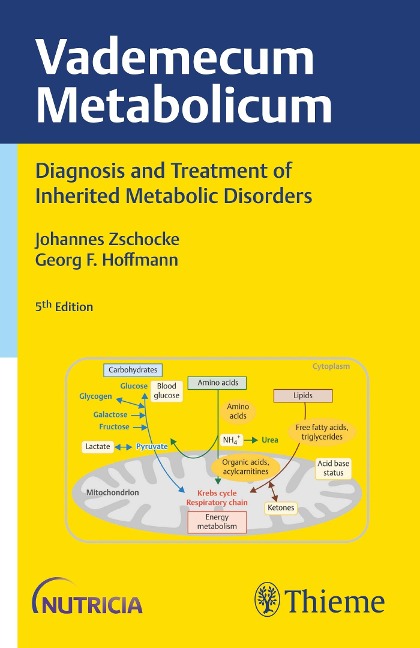
Vademecum Metabolicum: Diagnosis and Treatment of Inborn Errors of Metabolism Forword by William L. Nyhan, San Diego, USA
Johannes Zschocke, Georg F. Hoffmann
-20% with code BOOKS
In stock at our supplier
TOP

ROAR: How to Match Your Food and Fitness to Your Unique Female Physiology for Optimum Performance, Great Health, and a Strong, Lean Body for Life
-20% with code BOOKS
In stock at our supplier
TOP

Cellular and Molecular Immunology
Sarah Henrickson, Abul K. Abbas, Andrew H. Lichtman, Shiv Pillai
-20% with code BOOKS
In stock at our supplier
TOP

The Autistic Burnout Workbook: Your Guide to Your Personal Recovery Plan
-20% with code BOOKS
In stock at our supplier
TOP

McGee's Evidence-Based Physical Diagnosis
-20% with code BOOKS
In stock at our supplier
TOP
Physics, Pharmacology and Physiology for Anaesthetists: Key Concepts for the FRCA
Matthew E. Cross, Emma V. E. Plunkett
-20% with code BOOKS
In stock at our supplier
TOP
Oxford Handbook of Clinical Medicine
Peter Hateley, Iain McGurgan, Ian B. Wilkinson, Tim Raine, Dearbhla Kelly, Kate Wiles
-20% with code BOOKS
In stock at our supplier
TOP
Pocket Guide to Teaching for Clinical Instructors
-20% with code BOOKS
In stock at our supplier
TOP
Oxford Handbook of Critical Care
Andrew Webb, Mervyn Singer, Alice Carter
-20% with code BOOKS
In stock at our supplier
Description
Over the past decade, our laboratory and others have been concerned with molecular archaeological studies aimed at revealing the origins and evolutionary histories of permeases (1). These studies have revealed that several different families, defined on the basis of sequence similarities, arose independently of each other, at different times in evolutionary history, following different routes. When complete microbial genomes first became available for analysis, we adapted p- existing software and designed new programs that allowed us quickly to identify probable transmembrane proteins, estimate their topologies and determine the likelihood that they function in transport (2). This work allowed us to expand previously-recognized families and to identify dozens of new families. All of this work then led us to attempt to design a rational but comprehensive classification system that would be applicable to the complete complement of transport systems found in all living organisms (3). The classification system that we have devised is based primarily on mode of transport and energy coupling mechanism, secondarily on molecular phylogeny, and lastly on the substrate specificities of the individual permeases (4).
More Information
| Publisher | Springer US |
|---|---|
| Series | Genetic Engineering: Principles and Methods |
| Release year | 2001 |
| Cover type | Hardcover |
| EAN | 9780306466458 |