
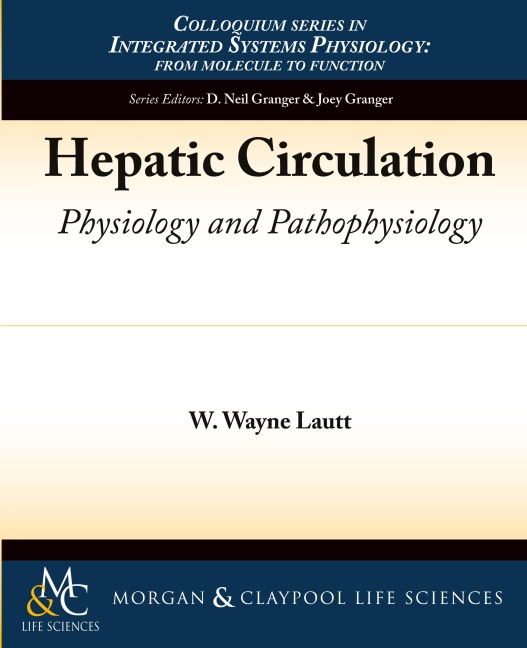
Hepatic Circulation - Wayne Lautt
-20% with code BOOKS
Shipping in 15-21 days
30-day return policy
The Hepatic circulation is unique among vascular beds. The most obvious unique features include the dual vascular supply; the mechanism of intrinsic regulation of the hepatic artery (the hepatic arterial buffer response); the fact that portal blood flow, supplying two thirds of liver blood flow, is not controlled directly by the liver; the fact that 20% of the cardiac output rushes through the most vascular ... Full description
You May Also Like
 TOP
TOP

The Myth of Normal: Trauma, Illness, and Healing in a Toxic Culture
-20% with code BOOKS
In stock at our supplier
TOP
No Bad Parts: Healing Trauma and Restoring Wholeness with the Internal Family Systems Model
-20% with code BOOKS
In stock at our supplier
TOP

On Connection: 'Powerful' MATT HAIG
-20% with code BOOKS
In stock at our supplier
TOP
Harrison's Principles of Internal Medicine (Vol.1 & Vol.2)
Stephen Hauser, Joseph Loscalzo, Steven Holland, Dan Longo, J. Larry Jameson, Dennis Kasper, Carol Langford, Anthony Fauci
-20% with code BOOKS
In stock at our supplier
TOP

The Body Keeps the Score: Brain, Mind, and Body in the Healing of Trauma
-20% with code BOOKS
In stock at our supplier
 TOP
TOP

Maybe You Should Talk to Someone: a therapist, her thearapist, and our lives revealed
-20% with code BOOKS
In stock at our supplier
TOP

How Not To Die: Discover the foods scientifically proven to prevent and reverse disease
-20% with code BOOKS
In stock at our supplier
TOP
Lifespan: Why We Age - and Why We Don't Have To
-20% with code BOOKS
In stock at our supplier
TOP
Vademecum Metabolicum: Diagnosis and Treatment of Inborn Errors of Metabolism Forword by William L. Nyhan, San Diego, USA
Johannes Zschocke, Georg F. Hoffmann
-20% with code BOOKS
In stock at our supplier
TOP

Cellular and Molecular Immunology
Sarah Henrickson, Abul K. Abbas, Andrew H. Lichtman, Shiv Pillai
-20% with code BOOKS
In stock at our supplier
TOP
Physics, Pharmacology and Physiology for Anaesthetists: Key Concepts for the FRCA
Matthew E. Cross, Emma V. E. Plunkett
-20% with code BOOKS
In stock at our supplier
TOP
Pocket Guide to Teaching for Clinical Instructors
-20% with code BOOKS
In stock at our supplier
TOP
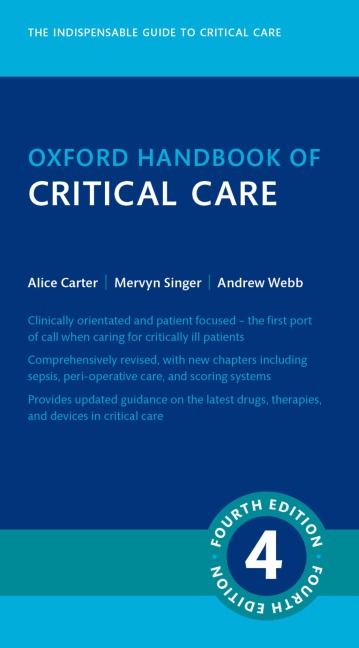
Oxford Handbook of Critical Care
Andrew Webb, Mervyn Singer, Alice Carter
-20% with code BOOKS
In stock at our supplier
TOP
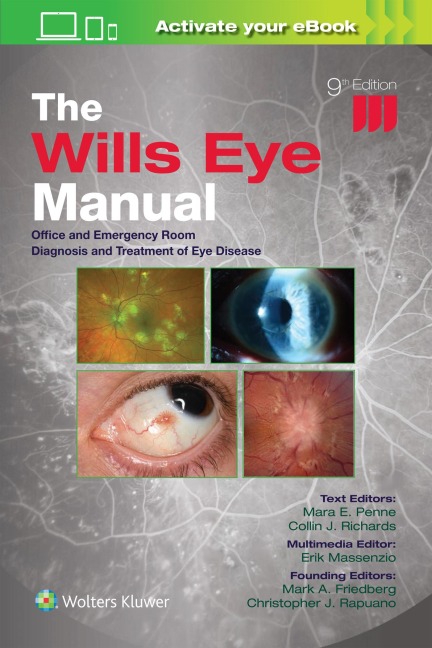
The Wills Eye Manual: Print + eBook with Multimedia: Office and Emergency Room Diagnosis and Treatment of Eye Disease
-20% with code BOOKS
In stock at our supplier
TOP


Who Deserves Your Love: How to Create Boundaries to Start, Strengthen or End Any Relationship
-20% with code BOOKS
In stock at our supplier
TOP
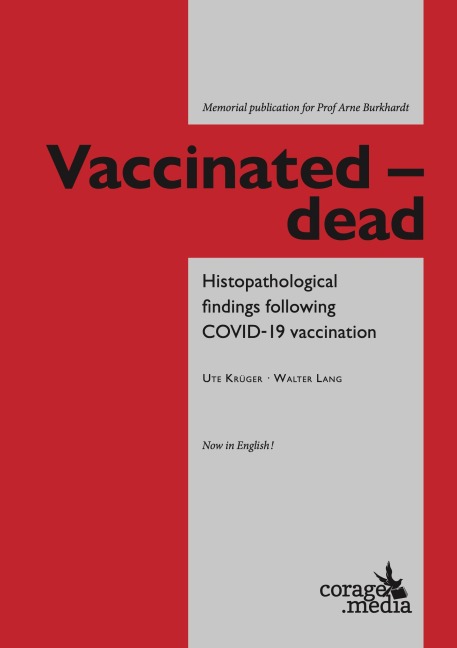
Vaccinated - dead: Histopathological findings following COVID-19 vaccination
-20% with code BOOKS
In stock at our supplier
TOP

Nine Months That Count Forever: How your pregnancy diet shapes your baby's future
-20% with code BOOKS
In stock at our supplier
TOP

Steal Like an Artist: 10 Things Nobody Told You About Being Creative
-20% with code BOOKS
In stock at our supplier
TOP

It Didn't Start with You: How Inherited Family Trauma Shapes Who We Are and How to End the Cycle
-20% with code BOOKS
In stock at our supplier
Description
The Hepatic circulation is unique among vascular beds. The most obvious unique features include the dual vascular supply; the mechanism of intrinsic regulation of the hepatic artery (the hepatic arterial buffer response); the fact that portal blood flow, supplying two thirds of liver blood flow, is not controlled directly by the liver; the fact that 20% of the cardiac output rushes through the most vascularized organ in the body, driven by a pressure gradient of only a few millimeters of mercury; the extremely distensible capacitance and venous resistance sites; the unidirectional acinar blood flow that regulates parenchymal cell metabolic specialization; and the high concentration of macrophagic (Kupffer) cells filtering the blood. The liver is the only organ reported to have regional blood flow monitored by the autonomic nervous system. This mechanism, when dysfunctional, accounts for the hepatorenal syndrome and offers a mechanistic therapeutic target to treat this syndrome. The trigger for liver regeneration is dependent on hepatic hemodynamics so that chronic liver blood flow regulates liver cell mass. In severe liver disease, the whole body circulation is reorganized, by forming portacaval shunts, to accommodate the increased intrahepatic venous resistance. These shunts protect the venous drainage of the splanchnic organs but lead to loss of major regulatory roles of the liver. The development of knowledge of the hepatic vasculature is presented from a historical perspective with modern concepts summarized based on the perspective of the author's four decades of devotion to this most marvelous of organs. Table of Contents: Acknowledgements / Historical Perspectives / Overview / Fluid Exchange / Capacitance / Resistance in the Hepatic Artery / Resistance in the Venous System / Fetal and Neonatal Hepatic Circulation / In Vivo Pharmacodynamic Approaches / Nitric Oxide / Adenosine / Hepatic Nerves / Hepatic Circulation and Toxicology / Hepatorenal Syndrome / Integrative Hepatic Response to Hemorrhage / Blood Flow Regulation of Hepatocyte Proliferation / Multiple Mechanisms Maintaining a Constant Hepatic Blood Flow to Liver Mass Ratio / Pathopharmacology and Repurposing Drugs as a Research Strategy / References
More Information
| Author | Wayne Lautt |
|---|---|
| Publisher | Biota Publishing |
| Release year | 2009 |
| Cover type | Softcover |
| EAN | 9781615040094 |