
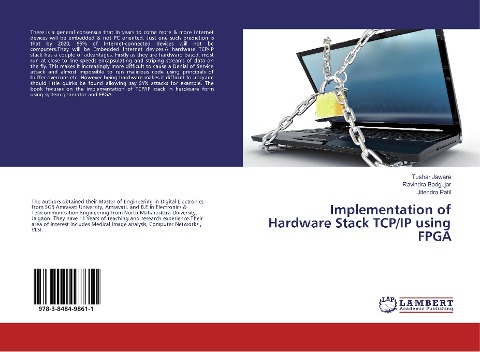
Implementation of Hardware Stack TCP/IP using FPGA - Ravindra Badgujar,Jitendra Patil,Tushar Jaware
-30% with code BOOKS
Shipping in 12-18 days
30-day return policy
There is a general consensus that in years to come more & more Internet devices will be embedded & not PC oriented. Just one such prediction is that by 2020, 95% of Internet-connected devices will not be computers.They will be Embedded Internet devices.A hardware TCP/IP stack has a couple of advantages. Firstly as they are hardware based, most run at close to line speeds encapsulating and striping s ... Full description
You May Also Like

 TOP
TOP

INCOSE Systems Engineering Handbook
-30% with code BOOKS
In stock at our supplier
TOP
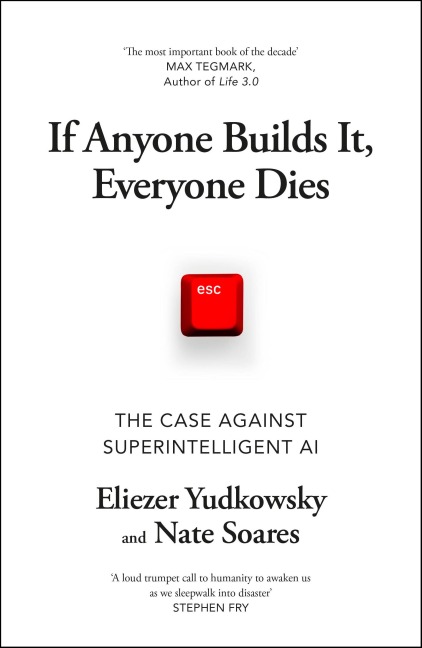
If Anyone Builds It, Everyone Dies: The Case Against Superintelligent AI
Eliezer Yudkowsky, Nate Soares
-30% with code BOOKS
In stock at our supplier
 TOP
TOP
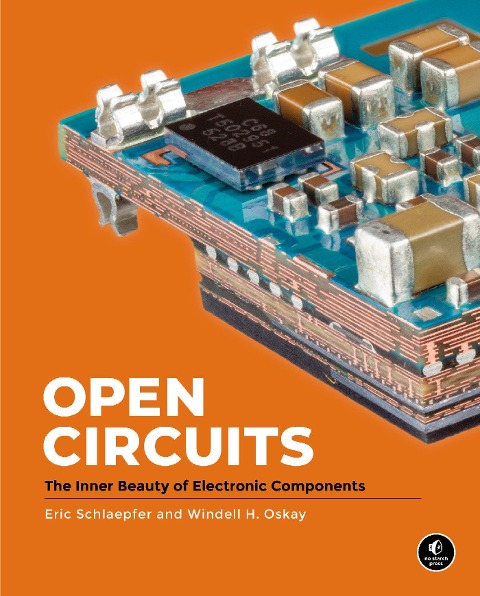
Open Circuits: The Inner Beauty of Electronic Components
Eric Schlaepfer, Windell Oskay
-30% with code BOOKS
In stock at our supplier
TOP
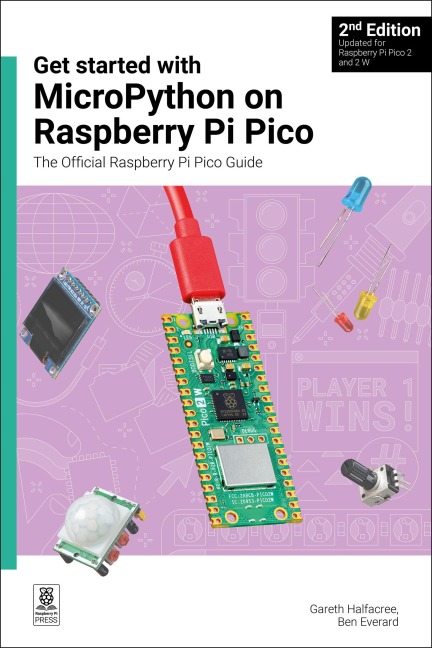
Get started with MicroPython on Raspberry Pi Pico: The Official Raspberry Pi Pico Guide
-30% with code BOOKS
In stock at our supplier
TOP


We Are Not Machines: The Fight for the Future of Work
-30% with code BOOKS
In stock at our supplier
TOP

Foundations of Flavor: The Noma Guide to Fermentation: Including Step-By-Step Information on Making and Cooking with: Koji, Kombuchas, Shoyus, Misos, Vinegars, Garums, Lacto-Ferments and black Fruits Vegetables
-30% with code BOOKS
In stock at our supplier
TOP

Nucleo Boards Programming with the STM32CubeIDE: Hands-on in more than 50 projects
-30% with code BOOKS
In stock at our supplier
TOP

Data-Driven Science and Engineering: Machine Learning, Dynamical Systems, and Control
Steven L. Brunton, J. Nathan Kutz
-30% with code BOOKS
In stock at our supplier
TOP

Black Holes: The Key to Understanding the Universe
-30% with code BOOKS
In stock at our supplier
TOP
Practical Electronics for Inventors
-30% with code BOOKS
In stock at our supplier
TOP

Flowers For Algernon: A Modern Literary Classic
-30% with code BOOKS
In stock at our supplier
TOP

Human Compatible: Artificial Intelligence and the Problem of Control
-30% with code BOOKS
Out of stock
TOP

How To Read Water: Clues & Patterns from Puddles to the Sea
-30% with code BOOKS
In stock at our supplier
TOP
Make: Electronics: Learning by Discovery: A hands-on primer for the new electronics enthusiast
-30% with code BOOKS
In stock at our supplier
TOP

Mastering the Arduino Uno R4: Programming and Projects for the Minima and WiFi
-30% with code BOOKS
In stock at our supplier
TOP

The Idea Factory: Bell Labs and the Great Age of American Innovation
-30% with code BOOKS
In stock at our supplier
TOP

Fundamentals of Aerodynamics ISE
Christopher Cadou, John D. Anderson
-30% with code BOOKS
In stock at our supplier
TOP

Foundation Design and Construction
-30% with code BOOKS
In stock at our supplier
Description
There is a general consensus that in years to come more & more Internet devices will be embedded & not PC oriented. Just one such prediction is that by 2020, 95% of Internet-connected devices will not be computers.They will be Embedded Internet devices.A hardware TCP/IP stack has a couple of advantages. Firstly as they are hardware based, most run at close to line speeds encapsulating and striping streams of data on the fly. This makes it increasingly more difficult to cause a Denial of Service attack and almost impossible to run malicious code using principals of buffer overruns etc. However being hardware makes it difficult to upgrade should little quirks be found allowing say SYN attacks for example. The book focuses on the implementation of TCP/IP stack in hardware form using system generator and FPGA.
More Information
| Author | Ravindra Badgujar, Jitendra Patil, Tushar Jaware |
|---|---|
| Publisher | LAP LAMBERT Academic Publishing |
| Release year | 2016 |
| Cover type | Softcover |
| EAN | 9783848498611 |