
Interactive Assessment -
-20% with code BOOKS
Shipping in 12-18 days
30-day return policy
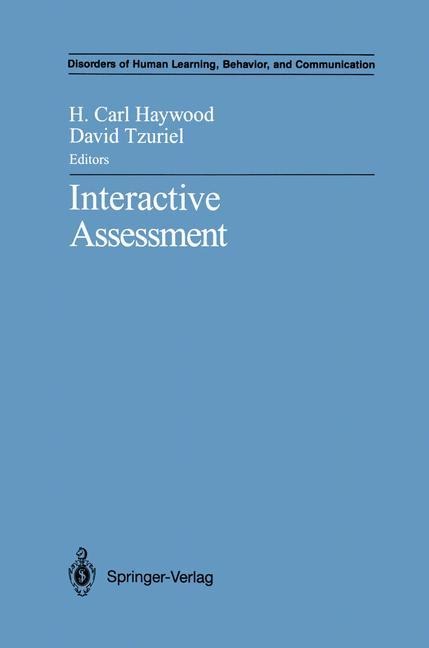
The terms interactive and dynamic would never have been associated with psychological and psychoeducational assessment a generation ago. They have currency now because of widespread dissatisfaction with the normative, standardized testing model, criticism of theoretical concepts of intelligence, recognition of abuses of standardized intelligence testing, and frustration with prediction and classification as ... Full description
You May Also Like
 TOP
TOP

The Myth of Normal: Trauma, Illness, and Healing in a Toxic Culture
-20% with code BOOKS
In stock
TOP
No Bad Parts: Healing Trauma and Restoring Wholeness with the Internal Family Systems Model
-20% with code BOOKS
In stock at our supplier
TOP

Maybe You Should Talk to Someone: a therapist, her thearapist, and our lives revealed
-20% with code BOOKS
In stock at our supplier
TOP

On Connection: 'Powerful' MATT HAIG
-20% with code BOOKS
In stock at our supplier
TOP

Aids to the Examination of the Peripheral Nervous System
-20% with code BOOKS
In stock at our supplier
TOP

Harrison's Principles of Internal Medicine (Vol.1 & Vol.2)
Stephen Hauser, Joseph Loscalzo, Steven Holland, Dan Longo, J. Larry Jameson, Dennis Kasper, Carol Langford, Anthony Fauci
-20% with code BOOKS
In stock at our supplier
TOP
The Body Keeps the Score: Brain, Mind, and Body in the Healing of Trauma
-20% with code BOOKS
In stock at our supplier
 TOP
TOP

The Checklist Manifesto: How to Get Things Right
-20% with code BOOKS
In stock at our supplier
TOP

How Not To Die: Discover the foods scientifically proven to prevent and reverse disease
-20% with code BOOKS
In stock at our supplier
TOP

Lifespan: Why We Age - and Why We Don't Have To
-20% with code BOOKS
In stock at our supplier
TOP

Vademecum Metabolicum: Diagnosis and Treatment of Inborn Errors of Metabolism Forword by William L. Nyhan, San Diego, USA
Johannes Zschocke, Georg F. Hoffmann
-20% with code BOOKS
In stock at our supplier
TOP

ROAR: How to Match Your Food and Fitness to Your Unique Female Physiology for Optimum Performance, Great Health, and a Strong, Lean Body for Life
-20% with code BOOKS
In stock at our supplier
TOP

Cellular and Molecular Immunology
Sarah Henrickson, Abul K. Abbas, Andrew H. Lichtman, Shiv Pillai
-20% with code BOOKS
In stock at our supplier
TOP
The Autistic Burnout Workbook: Your Guide to Your Personal Recovery Plan
-20% with code BOOKS
In stock at our supplier
TOP

McGee's Evidence-Based Physical Diagnosis
-20% with code BOOKS
In stock at our supplier
TOP

Physics, Pharmacology and Physiology for Anaesthetists: Key Concepts for the FRCA
Matthew E. Cross, Emma V. E. Plunkett
-20% with code BOOKS
In stock at our supplier
TOP

Oxford Handbook of Clinical Medicine
Peter Hateley, Iain McGurgan, Ian B. Wilkinson, Tim Raine, Dearbhla Kelly, Kate Wiles
-20% with code BOOKS
In stock at our supplier
TOP
Pocket Guide to Teaching for Clinical Instructors
-20% with code BOOKS
In stock at our supplier
TOP
Oxford Handbook of Critical Care
Andrew Webb, Mervyn Singer, Alice Carter
-20% with code BOOKS
In stock at our supplier
Description
The terms interactive and dynamic would never have been associated with psychological and psychoeducational assessment a generation ago. They have currency now because of widespread dissatisfaction with the normative, standardized testing model, criticism of theoretical concepts of intelligence, recognition of abuses of standardized intelligence testing, and frustration with prediction and classification as primary goals of assessment. It is almost certainly true that public policy concerns propel scientific activity far more often than science propels public policy! In the case of psychological assessment, public policy concerns have arisen in the last 20 years primarily around issues of possible "discrimination" against members of ethnic minorities. At the same time, there has been a re surgence of dedication to "excellence in education" goals. These concerns have led to such extreme measures as prohibition of the use of standard ized intelligence tests to determine school placement decisions, especially for minority children. They have led also to a search for alternatives to standardized, normative testing. The chapters in this volume represent a variety of answers to this need.
More Information
| Publisher | Springer New York |
|---|---|
| Series | Disorders of Human Learning, Behavior, and Communication |
| Release year | 2013 |
| Cover type | Softcover |
| EAN | 9781461287537 |