
Materials & Process Integration for MEMS -

-20% with code BOOKS
Shipping in 17-23 days
30-day return policy
The field of materials and process integration for MEMS research has an extensive past as well as a long and promising future. Researchers, academicians and engineers from around the world are increasingly devoting their efforts on the materials and process integration issues and opportunities in MEMS devices. These efforts are crucial to sustain the long-term growth of the MEMS field. The commercial MEMS c ... Full description
You May Also Like

 TOP
TOP

If Anyone Builds It, Everyone Dies: The Case Against Superintelligent AI
Eliezer Yudkowsky, Nate Soares
-20% with code BOOKS
In stock at our supplier
 TOP
TOP
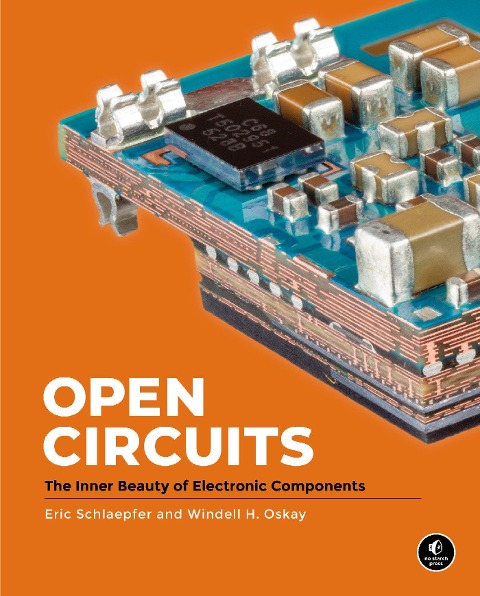
Open Circuits: The Inner Beauty of Electronic Components
Eric Schlaepfer, Windell Oskay
-20% with code BOOKS
In stock at our supplier
TOP
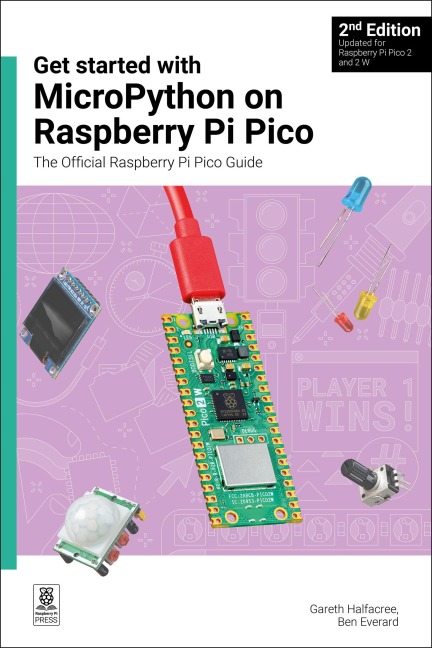
Get started with MicroPython on Raspberry Pi Pico: The Official Raspberry Pi Pico Guide
-20% with code BOOKS
In stock at our supplier
TOP

Practical Electronics for Inventors
-20% with code BOOKS
In stock at our supplier
TOP

Nucleo Boards Programming with the STM32CubeIDE: Hands-on in more than 50 projects
-20% with code BOOKS
In stock at our supplier
TOP

Data-Driven Science and Engineering: Machine Learning, Dynamical Systems, and Control
Steven L. Brunton, J. Nathan Kutz
-20% with code BOOKS
In stock at our supplier
TOP

Fundamentals of Aerodynamics ISE
Christopher Cadou, John D. Anderson
-20% with code BOOKS
In stock at our supplier
TOP

Black Holes: The Key to Understanding the Universe
-20% with code BOOKS
In stock at our supplier
TOP
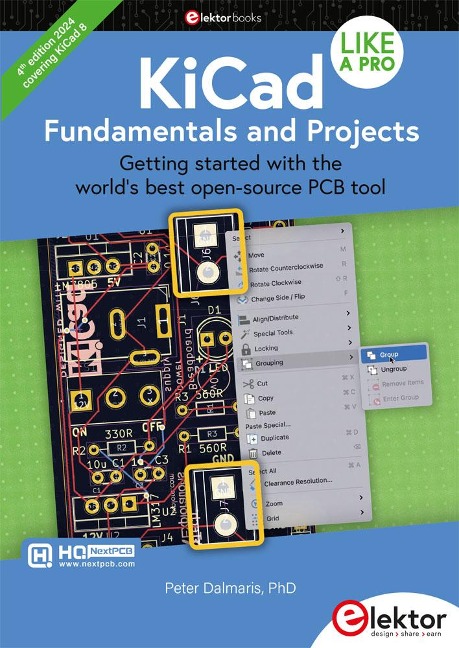
KiCad Like A Pro - Fundamentals and Projects: Getting started with the world's best open-source PCB tool
-20% with code BOOKS
In stock at our supplier
TOP

Foundations of Flavor: The Noma Guide to Fermentation: Including Step-By-Step Information on Making and Cooking with: Koji, Kombuchas, Shoyus, Misos, Vinegars, Garums, Lacto-Ferments and black Fruits Vegetables
-20% with code BOOKS
In stock at our supplier
TOP
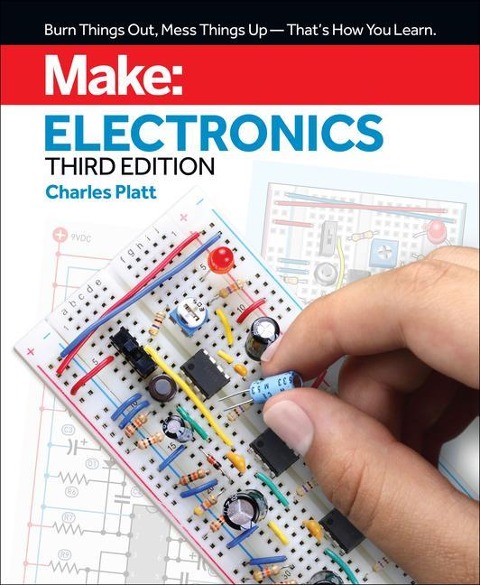
Make: Electronics: Learning by Discovery: A hands-on primer for the new electronics enthusiast
-20% with code BOOKS
In stock at our supplier
TOP

The Idea Factory: Bell Labs and the Great Age of American Innovation
-20% with code BOOKS
In stock at our supplier
TOP

Flowers For Algernon: A Modern Literary Classic
-20% with code BOOKS
In stock at our supplier
TOP

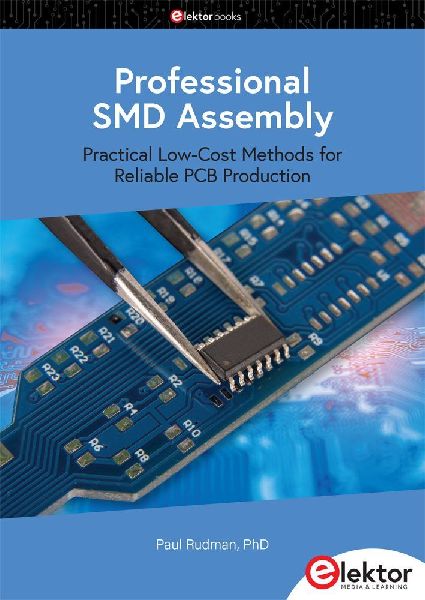
Professional SMD Assembly: Practical Low-Cost Methods for Reliable PCB Production
-20% with code BOOKS
In stock at our supplier
TOP

Blood in the Machine: The Origins of the Rebellion Against Big Tech
-20% with code BOOKS
In stock at our supplier
 TOP
TOP

Learning the Art of Electronics: A Hands-On Lab Course
Thomas C. Hayes, Paul Horowitz, David Abrams
-20% with code BOOKS
In stock at our supplier
TOP

Raspberry Pi 5 for Radio Amateurs: Program and Build Raspberry Pi 5 Based Ham Station Utilities with the RTL-SDR
-20% with code BOOKS
In stock at our supplier
Description
The field of materials and process integration for MEMS research has an extensive past as well as a long and promising future. Researchers, academicians and engineers from around the world are increasingly devoting their efforts on the materials and process integration issues and opportunities in MEMS devices. These efforts are crucial to sustain the long-term growth of the MEMS field. The commercial MEMS community is heavily driven by the push for profitable and sustainable products. In the course of establishing high volume and low-cost production processes, the critical importance of materials properties, behaviors, reliability, reproducibility, and predictability, as well as process integration of compatible materials systems become apparent. Although standard IC fabrication steps, particularly lithographic techniques, are leveraged heavily in the creation of MEMS devices, additional customized and novel micromachining techniques are needed to develop sophisticated MEMS structures. One of the most common techniques is bulk micromachining, by which micromechanical structures are created by etching into the bulk of the substrates with either anisotropic etching with strong alk:ali solution or deep reactive-ion etching (DRIB). The second common technique is surface micromachining, by which planar microstructures are created by sequential deposition and etching of thin films on the surface of the substrate, followed by a fmal removal of sacrificial layers to release suspended structures. Other techniques include deep lithography and plating to create metal structures with high aspect ratios (LIGA), micro electrodischarge machining (J.
More Information
| Publisher | Springer US |
|---|---|
| Series | Microsystems |
| Release year | 2002 |
| Cover type | Hardcover |
| EAN | 9781402071751 |