
Microencapsulation and Artificial Cells - T M S Chang

-20% with code BOOKS
Shipping in 22-28 days
30-day return policy
Early studies by Pendleton and West (1) in 1932 demonstrated that urea moved from the blood into the small intestine in uremic dogs. In 1946, Twiss and Kolff (2) showed in uremic patients that urea could be removed when an isotonic solution was perfused through an isolated in testinalloop. Since these early studies had demonstrated the presence of urea and its removal from the gastrointestinal tract, Yatzi ... Full description
You May Also Like
 TOP
TOP

The Myth of Normal: Trauma, Illness, and Healing in a Toxic Culture
-20% with code BOOKS
In stock at our supplier
TOP

The Checklist Manifesto: How to Get Things Right
-20% with code BOOKS
Out of stock
TOP
No Bad Parts: Healing Trauma and Restoring Wholeness with the Internal Family Systems Model
-20% with code BOOKS
In stock at our supplier
TOP

On Connection: 'Powerful' MATT HAIG
-20% with code BOOKS
In stock at our supplier
TOP
Harrison's Principles of Internal Medicine (Vol.1 & Vol.2)
Stephen Hauser, Joseph Loscalzo, Steven Holland, Dan Longo, J. Larry Jameson, Dennis Kasper, Carol Langford, Anthony Fauci
-20% with code BOOKS
In stock at our supplier
TOP

The Body Keeps the Score: Brain, Mind, and Body in the Healing of Trauma
-20% with code BOOKS
In stock at our supplier
 TOP
TOP

Maybe You Should Talk to Someone: a therapist, her thearapist, and our lives revealed
-20% with code BOOKS
In stock at our supplier
TOP

How Not To Die: Discover the foods scientifically proven to prevent and reverse disease
-20% with code BOOKS
In stock at our supplier
TOP

Lifespan: Why We Age - and Why We Don't Have To
-20% with code BOOKS
In stock at our supplier
TOP
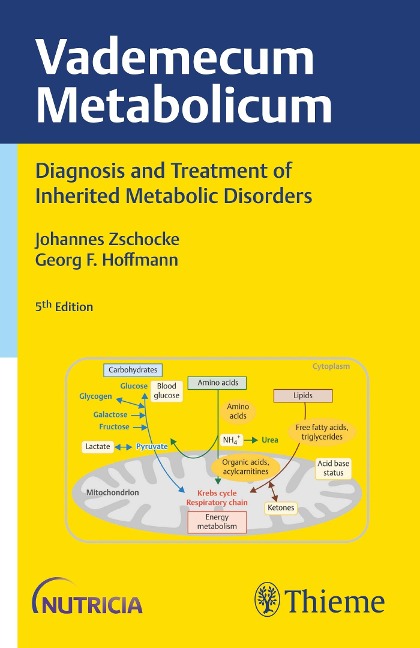
Vademecum Metabolicum: Diagnosis and Treatment of Inborn Errors of Metabolism Forword by William L. Nyhan, San Diego, USA
Johannes Zschocke, Georg F. Hoffmann
-20% with code BOOKS
In stock at our supplier
TOP

Cellular and Molecular Immunology
Sarah Henrickson, Abul K. Abbas, Andrew H. Lichtman, Shiv Pillai
-20% with code BOOKS
In stock at our supplier
TOP
Physics, Pharmacology and Physiology for Anaesthetists: Key Concepts for the FRCA
Matthew E. Cross, Emma V. E. Plunkett
-20% with code BOOKS
In stock at our supplier
TOP
Pocket Guide to Teaching for Clinical Instructors
-20% with code BOOKS
In stock at our supplier
TOP
Oxford Handbook of Critical Care
Andrew Webb, Mervyn Singer, Alice Carter
-20% with code BOOKS
In stock at our supplier
TOP

The Wills Eye Manual: Print + eBook with Multimedia: Office and Emergency Room Diagnosis and Treatment of Eye Disease
-20% with code BOOKS
In stock at our supplier
TOP


Who Deserves Your Love: How to Create Boundaries to Start, Strengthen or End Any Relationship
-20% with code BOOKS
In stock at our supplier
TOP
Vaccinated - dead: Histopathological findings following COVID-19 vaccination
-20% with code BOOKS
In stock at our supplier
TOP

Steal Like an Artist: 10 Things Nobody Told You About Being Creative
-20% with code BOOKS
In stock at our supplier
TOP

It Didn't Start with You: How Inherited Family Trauma Shapes Who We Are and How to End the Cycle
-20% with code BOOKS
In stock at our supplier
Description
Early studies by Pendleton and West (1) in 1932 demonstrated that urea moved from the blood into the small intestine in uremic dogs. In 1946, Twiss and Kolff (2) showed in uremic patients that urea could be removed when an isotonic solution was perfused through an isolated in testinalloop. Since these early studies had demonstrated the presence of urea and its removal from the gastrointestinal tract, Yatzidis (3) in 1964 investigated the use of activated charcoal for the removal of uremic wastes from the intestinal tract. In addition to Yatzidis' studies with char coal, other investigations with charcoal have been unable to confirm any significant reduction in serum levels of urea, creatinine, uric acid, or guanidines (4,5) via this approach. At the same time that Yatzidis proposed the use of charcoal for re moval of nitrogenous wastes from the intestinal tract, he also proposed using charcoal in a hemoperfusion microapparatus as an effective artifi cial kidney. However, clinical studies performed with the Yatzidis char coal artificial kidney showed an adverse affect on platelets and the re lease of embolizing particles (6,7). To overcome these platelet and emboli problems, Chang's group (8) proposed the general idea of "artificial cells," Le., microcapsules con taining adsorbents. Since the charcoal particles were now encased within blood compatible membranes, they could not leave the microcapsules to cause embolism, and platelets did not now come in direct contact with the charcoal. In their early clinical hemoperfusion studies, Chang et al.
More Information
| Author | T M S Chang |
|---|---|
| Publisher | Humana Press |
| Release year | 1984 |
| Cover type | Hardcover |
| EAN | 9780896030732 |