
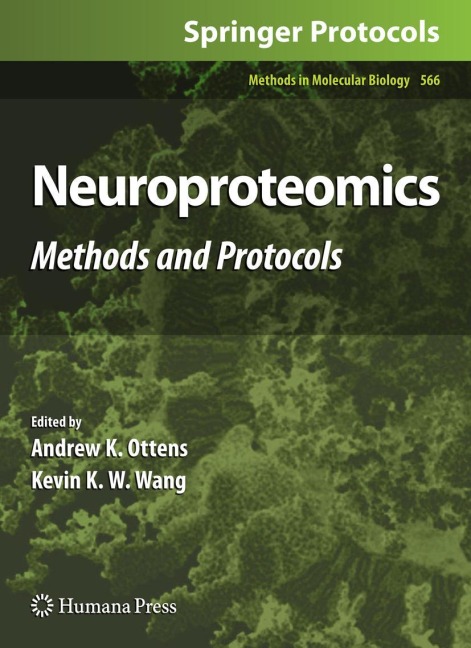
Neuroproteomics: Methods and Protocols -
-20% with code BOOKS
Shipping in 12-18 days
30-day return policy
Neuroproteomics: Methods and Protocols presents experimental details for applying proteomics to the study of the central nervous system (CNS) and its dysfunction through trauma and disease. The target audience includes clinical or basic scientists who look to apply proteomics to the neurosciences. Often researchers hear of proteomics without an adequate explanation of the methodology and inherent limitation ... Full description
You May Also Like
 TOP
TOP

Determined: The Science of Life Without Free Will
-20% with code BOOKS
In stock at our supplier
TOP

The Rise and Fall of the Dinosaurs: A New History of a Lost World
-20% with code BOOKS
In stock at our supplier
TOP

Factfulness: Ten Reasons We're Wrong About the World--and Why Things Are Better Than You Think
Ola Rosling, Anna Rosling Rönnlund, Hans Rosling
-20% with code BOOKS
In stock at our supplier
TOP

Biology: A Global Approach, Global Edition
Neil Campbell, Rebecca Orr, Lisa Urry, Peter Minorsky, Michael Cain, Jane Reece, Steven Wasserman
-20% with code BOOKS
In stock at our supplier
TOP

Six Not-so-easy Pieces: Einstein's Relativity, Symmetry, and Space-Time
Richard P. Feynman, Robert B. Leighton, Matthew Sands
-20% with code BOOKS
In stock at our supplier
TOP

The Light Eaters: How the Unseen World of Plant Intelligence Offers a New Understanding of Life on Earth
-20% with code BOOKS
In stock at our supplier
 TOP
TOP


The Age of Alchemy: How Early Innovators Shaped Modern Chemistry
-20% with code BOOKS
In stock at our supplier
TOP

The Secrets of our DNA: How Genetics has Changed the World
-20% with code BOOKS
In stock at our supplier
TOP

Janeway's Immunobiology
Leslie J. Berg, Kenneth Murphy, Casey Weaver
-20% with code BOOKS
In stock at our supplier
TOP

How to Solve it: A New Aspect of Mathematical Method
-20% with code BOOKS
In stock at our supplier
TOP

Behave: The Biology of Humans at Our Best and Worst
-20% with code BOOKS
In stock at our supplier
TOP

Why We Sleep: Unlocking the Power of Sleep and Dreams
-20% with code BOOKS
In stock
TOP
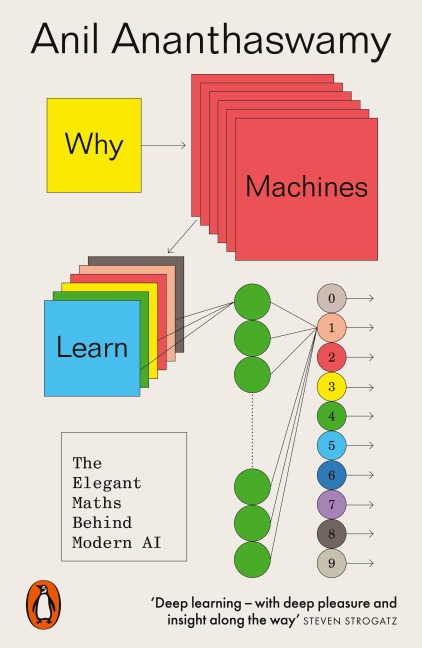
Why Machines Learn: The Elegant Maths Behind Modern AI
-20% with code BOOKS
In stock at our supplier
TOP

Six Easy Pieces: Essentials of Physics Explained by Its Most Brilliant Teacher
Richard P. Feynman, Robert B. Leighton, Matthew Sands
-20% with code BOOKS
In stock at our supplier
TOP

The Rise and Reign of the Mammals: A New History, from the Shadow of the Dinosaurs to Us
-20% with code BOOKS
In stock at our supplier
TOP
Learn Faster, Perform Better: A Musician's Guide to the Neuroscience of Practicing
-20% with code BOOKS
In stock at our supplier
TOP
The Brain That Changes Itself: Stories of Personal Triumph from the Frontiers of Brain Science
-20% with code BOOKS
In stock at our supplier
 TOP
TOP

Thing Explainer: Complicated Stuff in Simple Words
-20% with code BOOKS
In stock at our supplier
Description
Neuroproteomics: Methods and Protocols presents experimental details for applying proteomics to the study of the central nervous system (CNS) and its dysfunction through trauma and disease. The target audience includes clinical or basic scientists who look to apply proteomics to the neurosciences. Often researchers hear of proteomics without an adequate explanation of the methodology and inherent limitations. This volume conveys where proteomic methodology is in its application to CNS research and what results can be expected. We also address clinical translation of neuroproteomics, specifically in the area of biomarker research. The inception of neuroproteomics capitalized on rapid progress in large-molecule mass spectrometry over the last decade. Two seminal advances have spurred research ¿ development of reliable polypeptide ionization processes and bioinformatics to rapidly process tandem mass spectra for peptide identification and quantification. What has followed is the exponential application of mass spectrometry to proteome characteri- tion across biological and biomedical disciplines. Arguably, the most elaborate proteomic implementation is in studying the CNS, the most enigmatic and complex animal system. Neuroscience is characterized by grandiose questions ¿ what is consciousness, how does thought or memory work. Neuroproteomics researchers, however, have pri- rily involved themselves dysfunction, based on a pressing need (and invariably funding), in answering questions on CNS dysfunction, based on a pressing need (and invariably funding), and because such questions hold more accessible answers. Dysfunction is readily contrasted against normal function and presumably produces a lasting differential protein signature.
More Information
| Publisher | Humana Press |
|---|---|
| Series | Methods in Molecular Biology |
| Release year | 2012 |
| Cover type | Softcover |
| EAN | 9781617797545 |