
Optimization methods -

-20% with code BOOKS
Shipping in 12-18 days
30-day return policy
Source: Wikipedia. Pages: 35. Chapters: Expectation-maximization algorithm, Levenberg¿Marquardt algorithm, Gauss¿Newton algorithm, Gradient descent, Derivation of the conjugate gradient method, Luus¿Jaakola, BFGS method, Cutting-plane method, Golden section search, Karmarkar's algorithm, Newton's method in optimization, Nonlinear programming, Quasi-Newton method, Interior point method, Simultaneous perturba ... Full description
You May Also Like
 TOP
TOP

Six Not-so-easy Pieces: Einstein's Relativity, Symmetry, and Space-Time
Richard P. Feynman, Robert B. Leighton, Matthew Sands
-20% with code BOOKS
In stock at our supplier
TOP

Six Easy Pieces: Essentials of Physics Explained by Its Most Brilliant Teacher
Richard P. Feynman, Robert B. Leighton, Matthew Sands
-20% with code BOOKS
In stock at our supplier
TOP

Astrophysics for People in a Hurry: Essays on the Universe and Our Place Within It
-20% with code BOOKS
In stock at our supplier
TOP
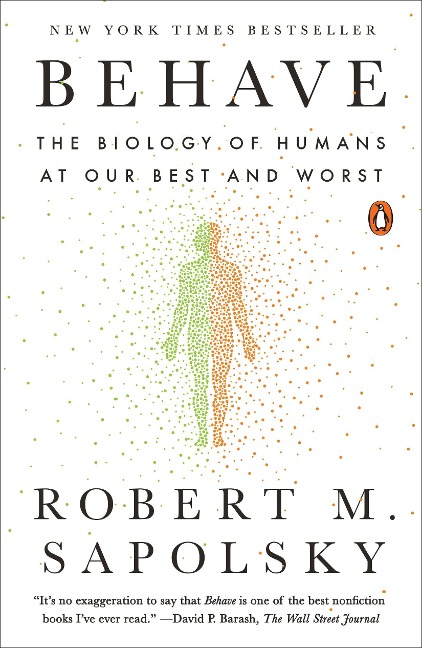
Behave: The Biology of Humans at Our Best and Worst
-20% with code BOOKS
In stock at our supplier
TOP

The Rise and Fall of the Dinosaurs: A New History of a Lost World
-20% with code BOOKS
In stock at our supplier
TOP

The Rise and Reign of the Mammals: A New History, from the Shadow of the Dinosaurs to Us
-20% with code BOOKS
In stock at our supplier
TOP

Determined: The Science of Life Without Free Will
-20% with code BOOKS
In stock at our supplier
 TOP
TOP


Beyond Inheritance: Our Ever-Mutating Cells and a New Understanding of Health
-20% with code BOOKS
In stock at our supplier
TOP

The Age of Alchemy: How Early Innovators Shaped Modern Chemistry
-20% with code BOOKS
In stock at our supplier
TOP

The Secrets of our DNA: How Genetics has Changed the World
-20% with code BOOKS
In stock at our supplier
TOP
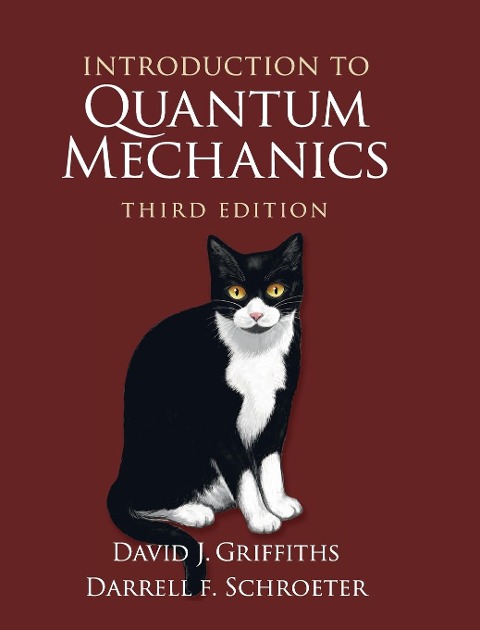
Introduction to Quantum Mechanics
Darrell F. Schroeter, David J. Griffiths
-20% with code BOOKS
In stock at our supplier
TOP
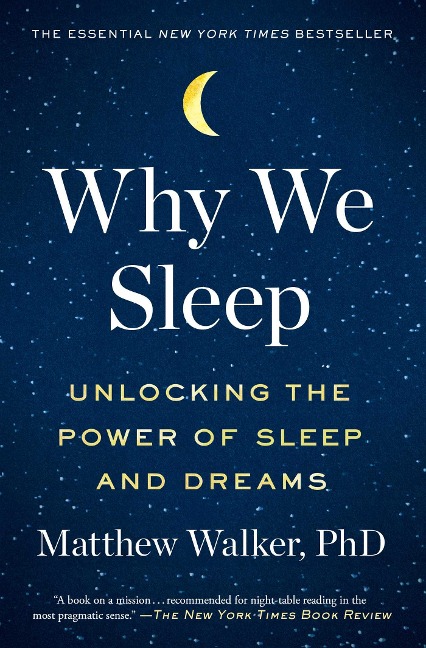
Why We Sleep: Unlocking the Power of Sleep and Dreams
-20% with code BOOKS
In stock
TOP
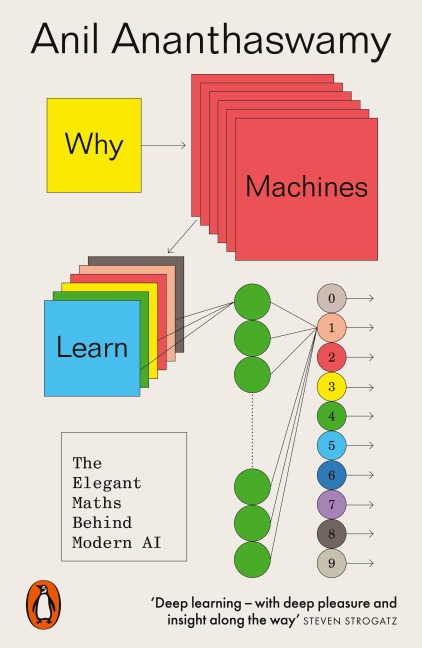
Why Machines Learn: The Elegant Maths Behind Modern AI
-20% with code BOOKS
In stock at our supplier
TOP

A Short History of Nearly Everything 2.0
-20% with code BOOKS
In stock at our supplier
TOP

A Brief History of Time: From the Big Bang to Black Holes
-20% with code BOOKS
In stock at our supplier

 TOP
TOP

How to Solve it: A New Aspect of Mathematical Method
-20% with code BOOKS
In stock at our supplier
TOP

Thing Explainer: Complicated Stuff in Simple Words
-20% with code BOOKS
In stock at our supplier
Description
Source: Wikipedia. Pages: 35. Chapters: Expectation-maximization algorithm, Levenberg¿Marquardt algorithm, Gauss¿Newton algorithm, Gradient descent, Derivation of the conjugate gradient method, Luus¿Jaakola, BFGS method, Cutting-plane method, Golden section search, Karmarkar's algorithm, Newton's method in optimization, Nonlinear programming, Quasi-Newton method, Interior point method, Simultaneous perturbation stochastic approximation, L-BFGS, WORHP, Nonlinear conjugate gradient method, Kantorovich theorem, Frank¿Wolfe algorithm, Trust region, Line search, Sequential quadratic programming, Davidon¿Fletcher¿Powell formula, IPOPT, Successive parabolic interpolation, SR1 formula, Powell's method, Local convergence, Optimization algorithm. Excerpt: In statistics, an expectation-maximization (EM) algorithm is a method for finding maximum likelihood or maximum a posteriori (MAP) estimates of parameters in statistical models, where the model depends on unobserved latent variables. EM is an iterative method which alternates between performing an expectation (E) step, which computes the expectation of the log-likelihood evaluated using the current estimate for the parameters, and a maximization (M) step, which computes parameters maximizing the expected log-likelihood found on the E step. These parameter-estimates are then used to determine the distribution of the latent variables in the next E step. The EM algorithm was explained and given its name in a classic 1977 paper by Arthur Dempster, Nan Laird, and Donald Rubin. They pointed out that the method had been "proposed many times in special circumstances" by earlier authors. In particular, a very detailed treatment of the EM method for exponential families was published by Rolf Sundberg in his thesis and several papers following his collaboration with Per Martin-Löf and Anders Martin-Löf. The Dempster-Laird-Rubin paper in 1977 generalized the method and sketched a convergence analysis for a wider class of problems. Regardless of earlier inventions, the innovative Dempster-Laird-Rubin paper in the Journal of the Royal Statistical Society received an enthusiastic discussion at the Royal Statistical Society meeting with Sundberg calling the paper "brilliant". The Dempster-Laird-Rubin paper established the EM method as an important tool of statistical analysis. The convergence analysis of the Dempster-Laird-Rubin paper was flawed and a correct convergence analysis was published by C. F. Jeff Wu in 1983. Wu's proof established the EM method's convergence outside of the exponential family, as claimed by Dempster-Laird-Rubin. Given a statistical model consisting of a set of observed data, a set of unobserved latent data or missing values , and a vector of unknown param
More Information
| Publisher | Books LLC, Reference Series |
|---|---|
| Release year | 2013 |
| Cover type | Softcover |
| EAN | 9781233138050 |