
Self-efficacy and Diffusion Theory: Implications for Faculty Development - Charles Edward Watson

-20% with code BOOKS
Shipping in 12-18 days
30-day return policy
Revision with unchanged content. There is a perception that a variety of forces, both social and technological, are accelerating the rate at which change is needed and occurring in higher education. There is also recognition that the primary means through which institutions change is via the creativity, innovation, pedagogy, and scholarship of their faculty. Addressing the challenges offered by these change ... Full description
You May Also Like
 TOP
TOP

E-Myth Revisited: Why Most Small Businesses Don't Work and What to Do About It
-20% with code BOOKS
In stock at our supplier

 TOP
TOP

Legacy: What The All Blacks Can Teach Us About The Business Of Life
-20% with code BOOKS
In stock at our supplier
TOP

Never Split the Difference: Negotiating as if Your Life Depended on It
-20% with code BOOKS
In stock
TOP

The Lean Startup: How Today's Entrepreneurs Use Continuous Innovation to Create Radically Successful Businesses
-20% with code BOOKS
In stock
TOP

Atomic Habits: An Easy & Proven Way to Build Good Habits & Break Bad Ones
-20% with code BOOKS
In stock at our supplier
TOP

Radical Candor: Be a Kick-Ass Boss Without Losing Your Humanity
-20% with code BOOKS
In stock at our supplier
TOP

Radical Candor: Be a Kick-Ass Boss Without Losing Your Humanity
-20% with code BOOKS
In stock at our supplier
TOP
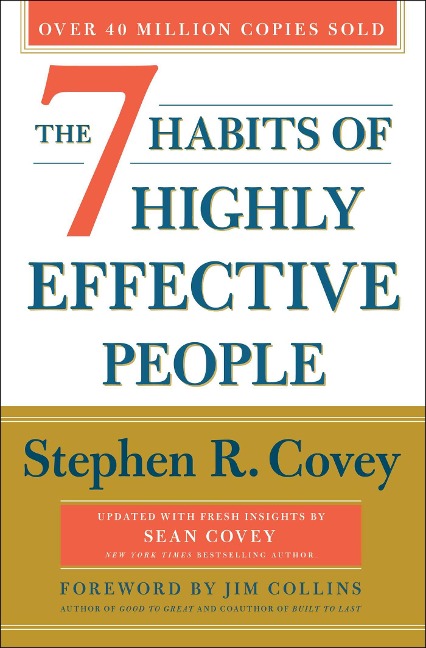
The 7 Habits of Highly Effective People. 30th Anniversary Edition: Powerful Lessons in Personal Change
Jim Collins, Sean Covey, Stephen R. Covey
-20% with code BOOKS
In stock
TOP

The Psychology of Money: Timeless Lessons on Wealth, Greed, and Happiness
-20% with code BOOKS
In stock
TOP

Influence: The Psychology of Persuasion
-20% with code BOOKS
In stock at our supplier
TOP

Unreasonable Hospitality: The Remarkable Power of Giving People More Than They Expect
-20% with code BOOKS
In stock at our supplier
TOP

Co-Intelligence: Living and Working with AI
-20% with code BOOKS
In stock at our supplier
TOP

Vienna: How the City of Ideas Created the Modern World
-20% with code BOOKS
In stock at our supplier
TOP

The First 90 Days: Proven Straegies for Getting up to Speed faster and smarter
-20% with code BOOKS
In stock at our supplier
TOP

Surrounded by Idiots Revised & Expanded Edition: The Four Types of Human Behavior and How to Effectively Communicate with Each in Business (and in Life)
-20% with code BOOKS
In stock at our supplier
TOP


The Infinity Machine: Demis Hassabis, DeepMind, and the Quest for Superintelligence
-20% with code BOOKS
In stock at our supplier
TOP

1873: The Rothschilds, the First Great Depression, and the Making of the Modern World
-20% with code BOOKS
In stock at our supplier
Description
Revision with unchanged content. There is a perception that a variety of forces, both social and technological, are accelerating the rate at which change is needed and occurring in higher education. There is also recognition that the primary means through which institutions change is via the creativity, innovation, pedagogy, and scholarship of their faculty. Addressing the challenges offered by these change issues, faculty development programs provide an institutionalized mechanism through which change may become manifest systemically. Situated within the context of institutional change, this study sought to better understand the underlying psychological processes that facilitate the adoption of innovations and new pedagogical practices by faculty within higher education. Through an interdisciplinary approach, self-efficacy research and Roger¿s diffusion theory were used to inform a line of inquiry that ultimately offers guidance for the evolution of future faculty development practices as well as directions for future areas of research.
More Information
| Author | Charles Edward Watson |
|---|---|
| Publisher | AV Akademikerverlag |
| Release year | 2012 |
| Cover type | Softcover |
| EAN | 9783639421910 |