
Sequential Analysis: Tests and Confidence Intervals - David Siegmund

-20% with code BOOKS
Shipping in 22-28 days
30-day return policy
The modern theory of Sequential Analysis came into existence simultaneously in the United States and Great Britain in response to demands for more efficient sampling inspection procedures during World War II. The develop ments were admirably summarized by their principal architect, A. Wald, in his book Sequential Analysis (1947). In spite of the extraordinary accomplishments of this period, there remained ... Full description
You May Also Like
 TOP
TOP
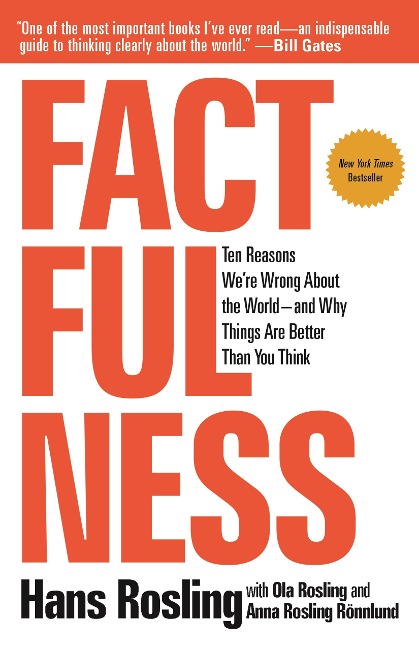
Factfulness: Ten Reasons We're Wrong About the World--and Why Things Are Better Than You Think
Ola Rosling, Anna Rosling Rönnlund, Hans Rosling
-20% with code BOOKS
In stock at our supplier
TOP

Biology: A Global Approach, Global Edition
Neil Campbell, Rebecca Orr, Lisa Urry, Peter Minorsky, Michael Cain, Jane Reece, Steven Wasserman
-20% with code BOOKS
In stock at our supplier
TOP

Six Not-so-easy Pieces: Einstein's Relativity, Symmetry, and Space-Time
Richard P. Feynman, Robert B. Leighton, Matthew Sands
-20% with code BOOKS
In stock at our supplier
TOP

Determined: The Science of Life Without Free Will
-20% with code BOOKS
In stock at our supplier
 TOP
TOP


The Age of Alchemy: How Early Innovators Shaped Modern Chemistry
-20% with code BOOKS
In stock at our supplier
TOP

The Secrets of our DNA: How Genetics has Changed the World
-20% with code BOOKS
In stock at our supplier
TOP

Janeway's Immunobiology
Leslie J. Berg, Kenneth Murphy, Casey Weaver
-20% with code BOOKS
In stock at our supplier
TOP

How to Solve it: A New Aspect of Mathematical Method
-20% with code BOOKS
In stock at our supplier
TOP
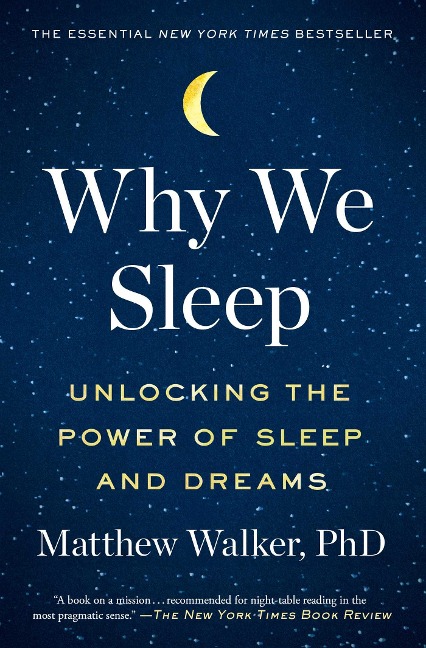
Why We Sleep: Unlocking the Power of Sleep and Dreams
-20% with code BOOKS
In stock
TOP

The Light Eaters: How the Unseen World of Plant Intelligence Offers a New Understanding of Life on Earth
-20% with code BOOKS
In stock at our supplier
TOP

Six Easy Pieces: Essentials of Physics Explained by Its Most Brilliant Teacher
Richard P. Feynman, Robert B. Leighton, Matthew Sands
-20% with code BOOKS
In stock at our supplier
TOP

The Rise and Fall of the Dinosaurs: A New History of a Lost World
-20% with code BOOKS
In stock at our supplier
TOP

The Rise and Reign of the Mammals: A New History, from the Shadow of the Dinosaurs to Us
-20% with code BOOKS
In stock at our supplier
TOP
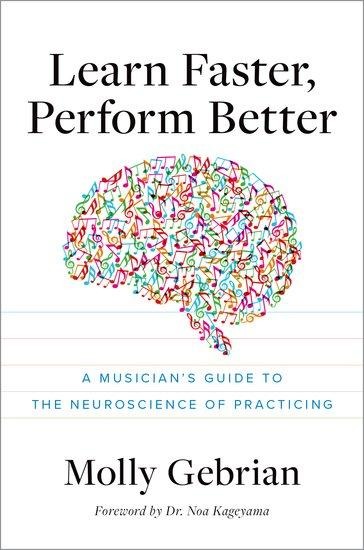
Learn Faster, Perform Better: A Musician's Guide to the Neuroscience of Practicing
-20% with code BOOKS
In stock at our supplier
 TOP
TOP

The Feynman Lectures on Physics. The New Millennium Edition
Matthew Sands, Robert Leighton, Richard Feynman
-20% with code BOOKS
In stock at our supplier
TOP

Thing Explainer: Complicated Stuff in Simple Words
-20% with code BOOKS
In stock at our supplier
TOP
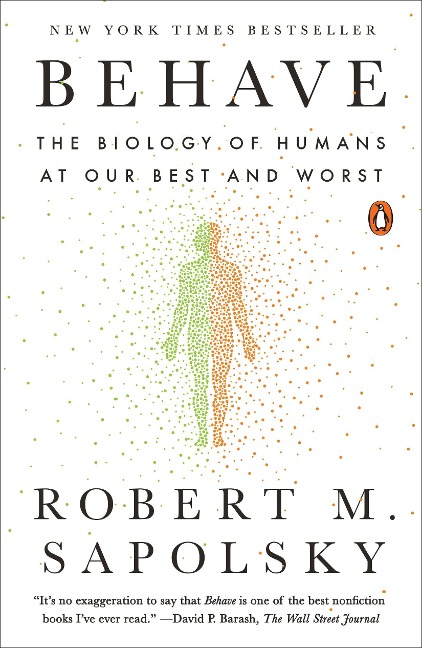
Behave: The Biology of Humans at Our Best and Worst
-20% with code BOOKS
In stock at our supplier
TOP
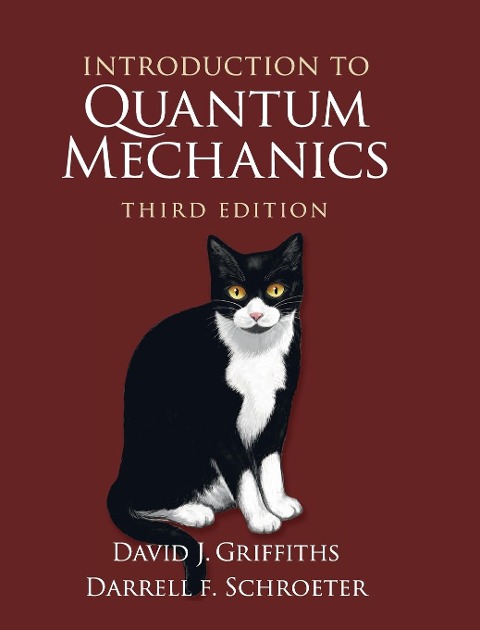
Introduction to Quantum Mechanics
Darrell F. Schroeter, David J. Griffiths
-20% with code BOOKS
In stock at our supplier
Description
The modern theory of Sequential Analysis came into existence simultaneously in the United States and Great Britain in response to demands for more efficient sampling inspection procedures during World War II. The develop ments were admirably summarized by their principal architect, A. Wald, in his book Sequential Analysis (1947). In spite of the extraordinary accomplishments of this period, there remained some dissatisfaction with the sequential probability ratio test and Wald's analysis of it. (i) The open-ended continuation region with the concomitant possibility of taking an arbitrarily large number of observations seems intol erable in practice. (ii) Wald's elegant approximations based on "neglecting the excess" of the log likelihood ratio over the stopping boundaries are not especially accurate and do not allow one to study the effect oftaking observa tions in groups rather than one at a time. (iii) The beautiful optimality property of the sequential probability ratio test applies only to the artificial problem of testing a simple hypothesis against a simple alternative. In response to these issues and to new motivation from the direction of controlled clinical trials numerous modifications of the sequential probability ratio test were proposed and their properties studied-often by simulation or lengthy numerical computation. (A notable exception is Anderson, 1960; see III.7.) In the past decade it has become possible to give a more complete theoretical analysis of many of the proposals and hence to understand them better.
More Information
| Author | David Siegmund |
|---|---|
| Publisher | Springer New York |
| Release year | 1985 |
| Cover type | Hardcover |
| EAN | 9780387961347 |