
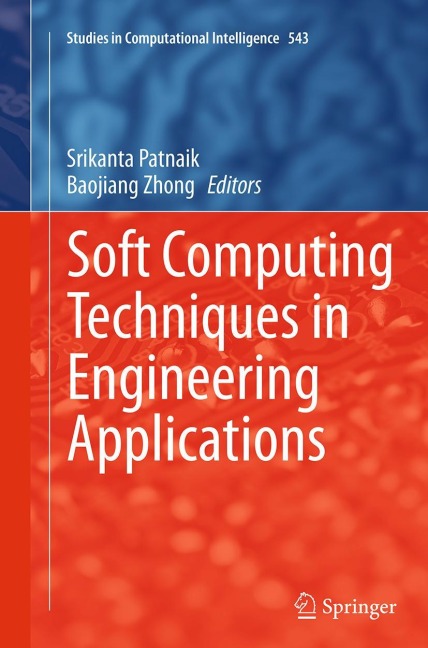
Soft Computing Techniques in Engineering Applications -
-20% with code BOOKS
Shipping in 12-18 days
30-day return policy
The Soft Computing techniques, which are based on the information processing of biological systems are now massively used in the area of pattern recognition, making prediction & planning, as well as acting on the environment. Ideally speaking, soft computing is not a subject of homogeneous concepts and techniques; rather, it is an amalgamation of distinct methods that confirms to its guiding principle. ... Full description
You May Also Like
 TOP
TOP

Gödel, Escher, Bach: An Eternal Golden Braid
-20% with code BOOKS
In stock at our supplier
TOP
AI Engineering: Building Applications with Foundation Models
-20% with code BOOKS
In stock at our supplier
TOP
Empire of AI: Dreams and Nightmares in Sam Altman's OpenAI
-20% with code BOOKS
In stock at our supplier
TOP

The Pragmatic Programmer: journey to mastery, 20th Anniversary Edition, 2/e: your journey to mastery, 20th Anniversary Edition
-20% with code BOOKS
In stock at our supplier
TOP


The Rust Programming Language
Steve Klabnik, Carol Nichols, Chris Krycho
-20% with code BOOKS
In stock at our supplier
TOP

How Linux Works: What Every Superuser Should Know
-20% with code BOOKS
In stock at our supplier
TOP
How To Think About AI: A Guide For The Perplexed
-20% with code BOOKS
In stock at our supplier
TOP
The Art of Game Design: A Book of Lenses
-20% with code BOOKS
In stock at our supplier
TOP

Python Crash Course: A Hands-On, Project-Based Introduction to Programming
-20% with code BOOKS
In stock at our supplier
TOP

CompTIA Security+ Certification Kit: Exam SY0-701
-20% with code BOOKS
In stock at our supplier
TOP
Automate the Boring Stuff with Python
-20% with code BOOKS
In stock at our supplier
TOP
Fundamentals of Software Architecture: A Modern Engineering Approach
-20% with code BOOKS
In stock at our supplier
TOP
Speak Data: Artists, Scientists, Thinkers, and Dreamers on How We Live Our Lives in Numbers
-20% with code BOOKS
In stock at our supplier
TOP

Hacking: The Art of Exploitation
-20% with code BOOKS
In stock at our supplier
TOP
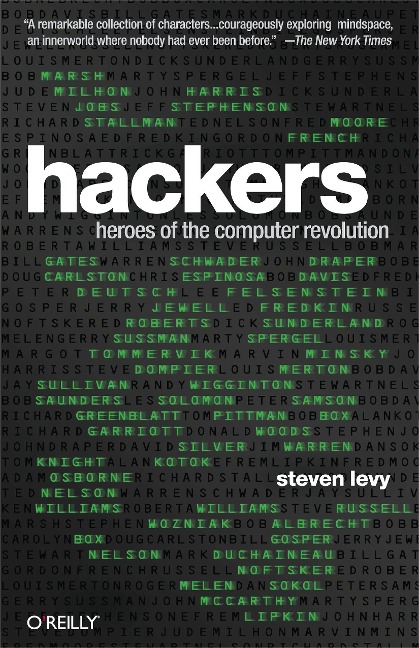
Hackers. 25th Anniversary Edition: Heroes of the Computer Revolution
-20% with code BOOKS
In stock at our supplier
TOP

Deep Learning
Ian Goodfellow, Yoshua Bengio, Aaron Courville
-20% with code BOOKS
In stock at our supplier
TOP

Proofs from THE BOOK
Martin Aigner, Günter M. Ziegler
-20% with code BOOKS
In stock at our supplier
TOP

Mathematics for Machine Learning
Cheng Soon Ong, A. Aldo Faisal, Marc Peter Deisenroth
-20% with code BOOKS
In stock at our supplier
TOP
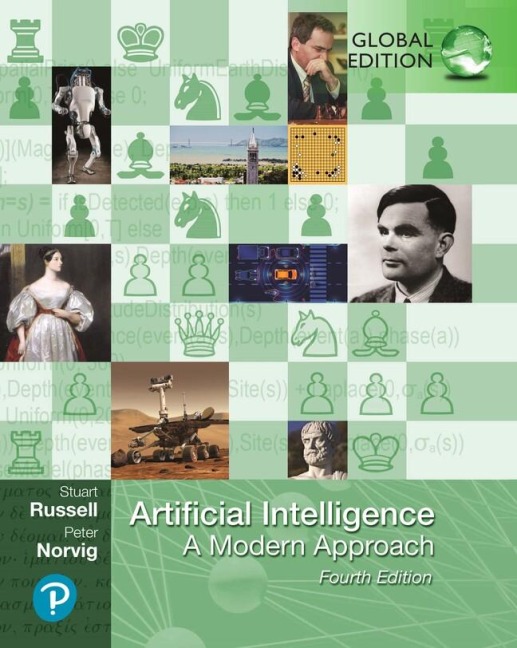
Artificial Intelligence: A Modern Approach, Global Edition
-20% with code BOOKS
In stock at our supplier
TOP

Heavy Wizardry 101: Shellcodes, Backdoors, Droppers, and Worms
-20% with code BOOKS
Out of stock
Description
The Soft Computing techniques, which are based on the information processing of biological systems are now massively used in the area of pattern recognition, making prediction & planning, as well as acting on the environment. Ideally speaking, soft computing is not a subject of homogeneous concepts and techniques; rather, it is an amalgamation of distinct methods that confirms to its guiding principle. At present, the main aim of soft computing is to exploit the tolerance for imprecision and uncertainty to achieve tractability, robustness and low solutions cost. The principal constituents of soft computing techniques are probabilistic reasoning, fuzzy logic, neuro-computing, genetic algorithms, belief networks, chaotic systems, as well as learning theory. This book covers contributions from various authors to demonstrate the use of soft computing techniques in various applications of engineering.
More Information
| Publisher | Springer Nature Switzerland |
|---|---|
| Series | Studies in Computational Intelligence |
| Release year | 2016 |
| Cover type | Softcover |
| EAN | 9783319375014 |