
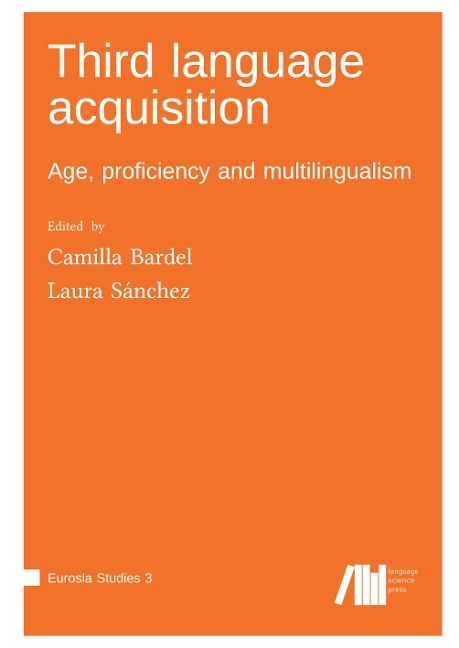
Third language acquisition -
-20% with code BOOKS
Shipping in 17-23 days
30-day return policy
This book deals with the phenomenon of third language (L3) acquisition. As a research field, L3 acquisition is established as a branch of multilingualism that is concerned with how multilinguals learn additional languages and the role that their multilingual background plays in the process of language learning. The volume points out some current directions in this particular research area with a number of s ... Full description
You May Also Like
 TOP
TOP
Technisches Wörterbuch für die Luftfahrt
-20% with code BOOKS
In stock at our supplier
TOP

Talk To Me In Korean Workbook - Level 1: New Edition
-20% with code BOOKS
In stock at our supplier
TOP

The Elements of Style - Illustrated
-20% with code BOOKS
In stock at our supplier
TOP
The Elements of Eloquence: How To Turn the Perfect English Phrase
-20% with code BOOKS
In stock at our supplier
TOP
Technisches Wörterbuch für die Luftfahrt: Englisch - Deutsch
-20% with code BOOKS
In stock at our supplier
 TOP
TOP
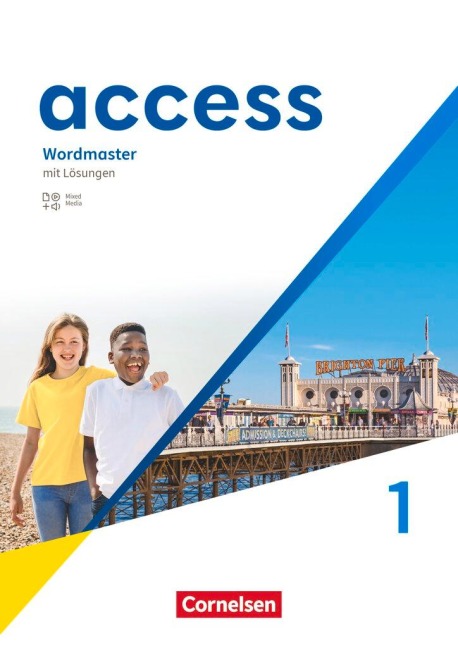
Access Band 1: 5. Schuljahr - Wordmaster - Vokabellernbuch
-20% with code BOOKS
In stock at our supplier
TOP
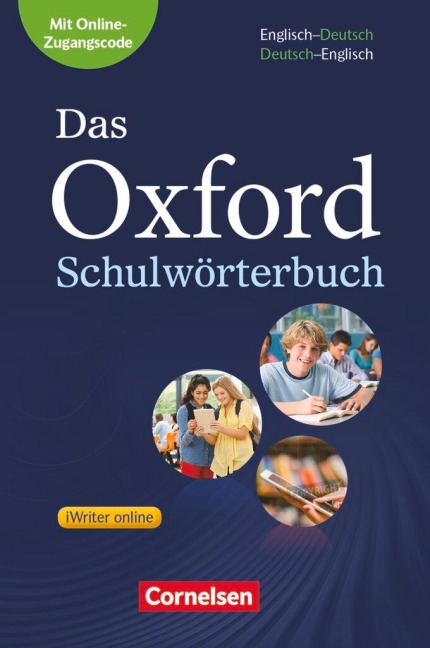
Das Oxford Schulwörterbuch A2-B1: Englisch - Deutsch / Deutsch - Englisch
-20% with code BOOKS
In stock at our supplier
TOP

Bird by Bird: Some Instructions on Writing and Life
-20% with code BOOKS
In stock at our supplier
TOP

How to Talk to Anyone: 92 Little Tricks for Big Success in Relationships
-20% with code BOOKS
In stock
TOP

Paperback Oxford English Dictionary
-20% with code BOOKS
In stock at our supplier
TOP

Korean Grammar in Use - Beginning to Intermediate: Free MP3 Audio Download
Jean-myung Ahn, Kyung-ah Lee, Hoo-young Han
-20% with code BOOKS
In stock at our supplier
TOP

Point it: Traveller's language kit. Bildwörterbuch
-20% with code BOOKS
In stock at our supplier
TOP

Sejong Korean Vocabulary and Grammar 1A
-20% with code BOOKS
In stock at our supplier
TOP
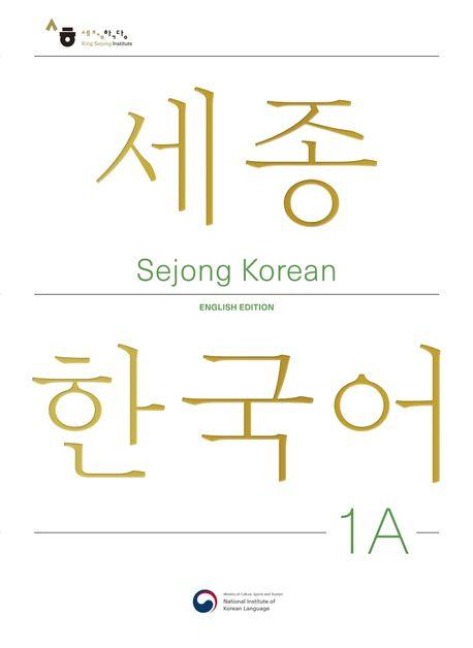
Sejong Korean Student Book 1A - English Edition: Free MP3 Download
-20% with code BOOKS
In stock at our supplier
TOP
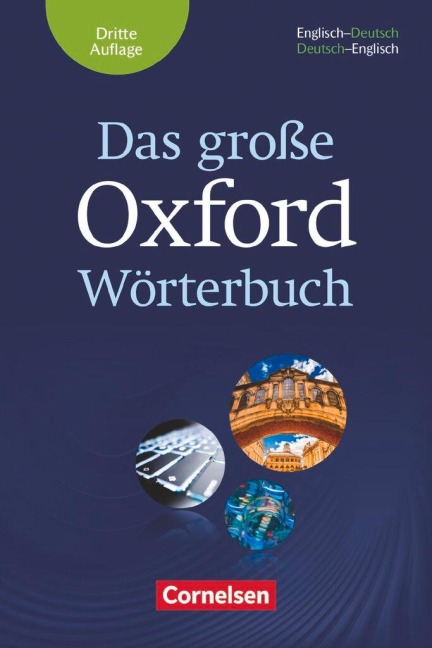
Das große Oxford Wörterbuch: Englisch-Deutsch / Deutsch-Englisch - Mit beigelegtem Exam Trainer
-20% with code BOOKS
In stock at our supplier
TOP

Sejong Korean Vocabulary and Grammar 1B
-20% with code BOOKS
In stock at our supplier
TOP
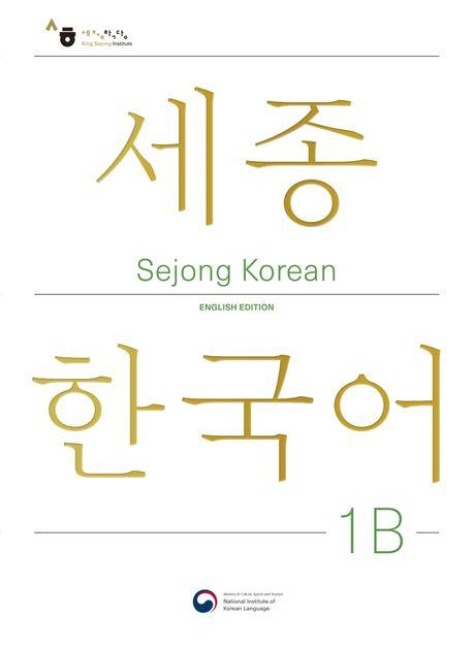
Sejong Korean Student Book 1B - English Edition: Free MP3 Download
-20% with code BOOKS
In stock at our supplier
TOP

Get ready for...: Movers: Student's Book with downloadable audio
Petrina Cliff, Kirstie Grainger
-20% with code BOOKS
In stock at our supplier
TOP
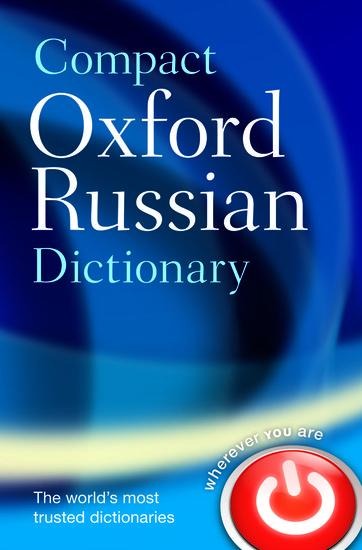
Compact Oxford Russian Dictionary
-20% with code BOOKS
In stock at our supplier
Description
This book deals with the phenomenon of third language (L3) acquisition. As a research field, L3 acquisition is established as a branch of multilingualism that is concerned with how multilinguals learn additional languages and the role that their multilingual background plays in the process of language learning. The volume points out some current directions in this particular research area with a number of studies that reveal the complexity of multilingual language learning and its typical variation and dynamics. The eight studies gathered in the book represent a wide range of theoretical positions and offer empirical evidence from learners belonging to different age groups, and with varying levels of proficiency in the target language, as well as in other non-native languages belonging to the learner¿s repertoire. Diverse linguistic phenomena and language combinations are viewed from a perspective where all previously acquired languages have a potential role to play in the process of learning a new language. In the six empirical studies, contexts of language learning in school or at university level constitute the main outlet for data collection. These studies involve several language backgrounds and language combinations and focus on various linguistic features. The specific target languages in the empirical studies are English, French and Italian. The volume also includes two theoretical chapters. The first one conceptualizes and describes the different types of multilingual language learning investigated in the volume: i) third or additional language learning by learners who are bilinguals from an early age, and ii) third or additional language learning by people who have previous experience of one or more non-native languages learned after the critical period. In particular, issues related to the roles played by age and proficiency in multilingual acquisition are discussed. The other theoretical chapter conceptualizes the grammatical category of aspect, reviewing previous studies on second and third language acquisition of aspect. Different models for L3 learning and their relevance and implications for representations of aspect and for potential differences in the processing of second and third language acquisition are also examined in this chapter. As a whole, the book presents current research into third or additional language learning by young learners or adults, considering some of the most important factors for the complex process of multilingual language learning: the age of onset of the additional language and that of previously acquired languages, social and affective factors, instruction, language proficiency and literacy, the typology of the background languages and the role they play in shaping syntax, lexicon, and other components of a L3. The idea for this book emanates from the symposium Multilingualism, language proficiency and age, organized by Camilla Bardel and Laura Sánchez at Stockholm University, Department of Language Education, in December 2016.
More Information
| Publisher | Language Science Press |
|---|---|
| Series | EuroSLA Studies 3 |
| Release year | 2020 |
| Cover type | Hardcover |
| EAN | 9783961102815 |