From the Author Theories of relativity exist somewhere in the lexicon. Poetry proliferates, its words perseverate the mind and leave formations scattered behind. A cannon of work compiled from 2013-14 beckoned to serve a purpose. The idea was to link common areas-- disciplines of life--in one book. Spatial relationships, how we relate to friendship, aging, marriage, politics, religion, and technology co-exi ...Full description
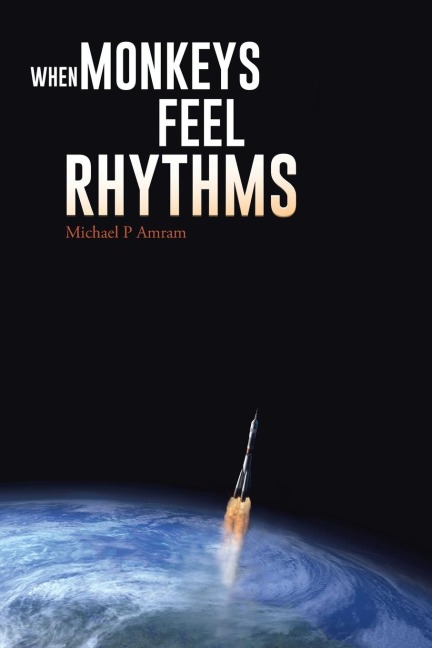
From the Author Theories of relativity exist somewhere in the lexicon. Poetry proliferates, its words perseverate the mind and leave formations scattered behind. A cannon of work compiled from 2013-14 beckoned to serve a purpose. The idea was to link common areas-- disciplines of life--in one book. Spatial relationships, how we relate to friendship, aging, marriage, politics, religion, and technology co-exist in one book of sixty poems. When Monkey feel Rhythms holds everyone's key to the universe somewhere. The job of the reader-- the poetic diplomat--is to find their forte in the disciplines I've chosen as a life study. One of my favorite comments on technology and where we're headed comes in the verse of a poem: "Human thought--archaic concepts That can't even compete with them-- The brains went away when 8-track Tapes were pulled from the bins to be Replaced with the shiny discs that Wouldn't click to the next track; Digitally burned-- infinitely Faultless with subliminal sounds...." I have fun at the expense of time-honored concepts and traditions. In categorizing friendship I interject musical quality and imagery to the transition of a drinking establishment: "We'd sling guns from hips and shoot Those who drank on sight; Spurs would spin--they'd jingle my walk To swagger in And push swinging doors to meet Their hinges' greed-- Fanning stale popcorn's smell that Fought beer to exceed..."Rhythms swings from echelons of lexicons like monkeys and ape men swung from vines. The poems tone from humorous, to tender, to sarcastic contempt. Product Description In French the word for my is pronounced mon. When Monkeys feel Rhythms taps chosen veins of humanity. The poems examine how relating to aspects of life has affected us, and how the topics I?ve chosen to write about continue to confound us in spite of their power to enlighten us. For better or worse, some poems look for how far we?ve come from times when vines swung as means of transportation. These sixty poems share a common ancestral link. They chain together the primate mentality that follows those who have prospered in life and those that life has failed. The poems investigate relationships and indicate the advances that have been made since those relative connections were discovered. Monkeys points out the need to think and communicate, all the while watching those basic primal skills deteriorate. Mundane aspects of marriage, friendship, politics, and technology are explored. When Monkeys feel Rhythmus peels back the layers of where humanity has been, what we?ve lost, and where we have yet to go. In ?Evolution Lost another Tale,? a tether of technology is addressed: ?do you ever re-think the calls you made to slap steering wheels as you raged the roads and bumpers were nudged sudden so your middle finger rose to convey simple thoughts?? This poem points to how a race of drivers has evolved. The poem shows the distance primates have come with the wheel they once invented. It says how the wheel?s novelty is worn out and communication can no longer wait until the trip to end. It asks when the need to communicate defeated the distinct possibility of fatality. It asks when people became so self-important that they would risk their lives just to be heard. It speaks of how technology has enlarged our heads, shrunk the world, and re-aligned priorities: ??there were no distractions then there were no distractions when-- channels broke for truckers to handle their loads with a sense for humor that wouldn?t talk fierce to rage the roads;? Metaphors often disguise malignancy. My poems find cancers in society. The rhythms shake; they quiver and flush out the benign. I invite you to examine what is peeled back. When Monkeys feel Rhythms will make you laugh. Some might make you cry. Others look for the moments you like to say ?a-ha.? Some are bold, others are shy. I hope you find reading them as fun and enlightening as writing them was. Review "The poems in Mic

 TOP
TOP