
Maths for computer scientists
Delve into the essential world of mathematical principles that underpin computer science. This category features a selection of texts designed for those looking to deepen their understanding of algorithms, complexity, and logic, providing a solid foundation for both students and professionals in the field. With clear explanations and practical applications, these resources are essential for mastering the mathematical theory of computation.
 TOP
TOP
Proofs from THE BOOK
Martin Aigner, Günter M. Ziegler
-20% with code BOOKS
In stock at our supplier

A Primer on Scientific Programming with Python
-20% with code BOOKS
In stock at our supplier
Practical Optimization: Algorithms and Engineering Applications
-20% with code BOOKS
In stock at our supplier
Universal Time-Series Forecasting with Mixture Predictors
-20% with code BOOKS
In stock at our supplier

An Introduction to Python Programming for Scientists and Engineers
Hannah Aizenman, Johnny Wei-Bing Lin, Kim Gunnerson, Joanne Liu, Erin Manette Cartas Espinel
-20% with code BOOKS
In stock at our supplier
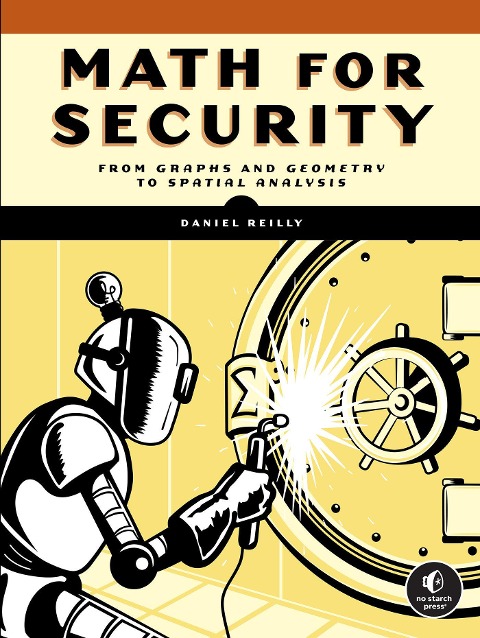
Math for Security: From Graphs and Geometry to Spatial Analysis
-20% with code BOOKS
In stock at our supplier
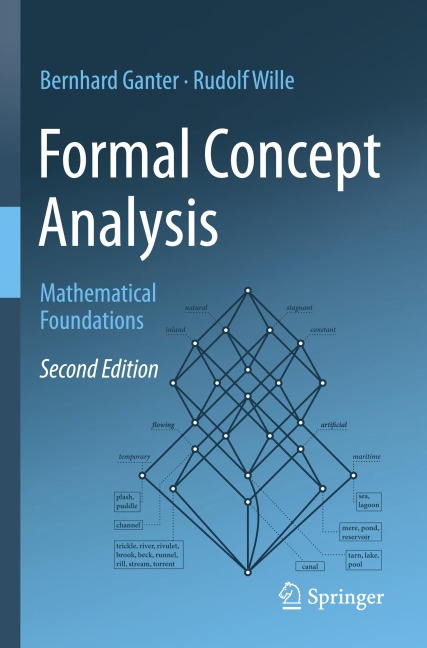
Formal Concept Analysis: Mathematical Foundations
-20% with code BOOKS
In stock at our supplier
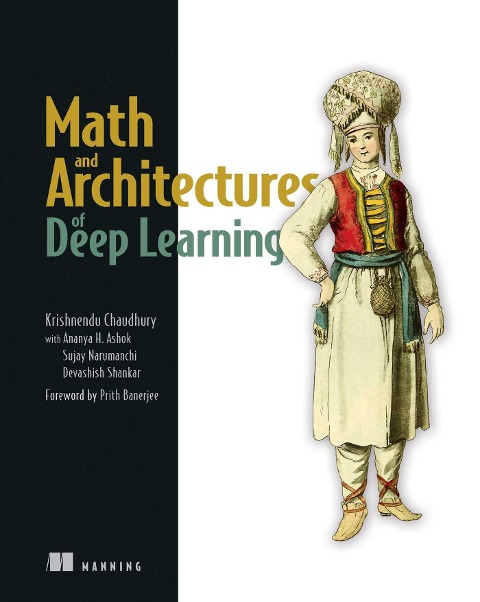
Math and Architectures of Deep Learning
-20% with code BOOKS
In stock at our supplier
ZUM 95: The Z Formal Specification Notation: 9th International Conference of Z Users, Limerick, Ireland, September 7 - 9, 1995. Proceedings
-20% with code BOOKS
In stock at our supplier
Advances in the Design of Symbolic Computation Systems
-20% with code BOOKS
In stock at our supplier
Applied Parallel Computing. Industrial Computation and Optimization: Third International Workshop, PARA 96, Lyngby, Denmark, August 18-21, 1996, Proceedings
-20% with code BOOKS
In stock at our supplier
Design and Implementation of Symbolic Computation Systems: International Symposium, DISCO 96, Karlsruhe, Germany, September 18-20, 1996. Proceedings
-20% with code BOOKS
In stock at our supplier
Algorithmic Number Theory: Second International Symposium, ANTS-II, Talence, France, May 18 - 23, 1996, Proceedings
-20% with code BOOKS
In stock at our supplier
Programming Languages: Implementations, Logics and Programs: 7th International Symposium, PLILP 95, Utrecht, The Netherlands, September 20 - 22, 1995. Proceedings
-20% with code BOOKS
In stock at our supplier

LISP Lore: A Guide to Programming the LISP Machine
-20% with code BOOKS
In stock at our supplier
Polynomial Algorithms in Computer Algebra
-20% with code BOOKS
In stock at our supplier
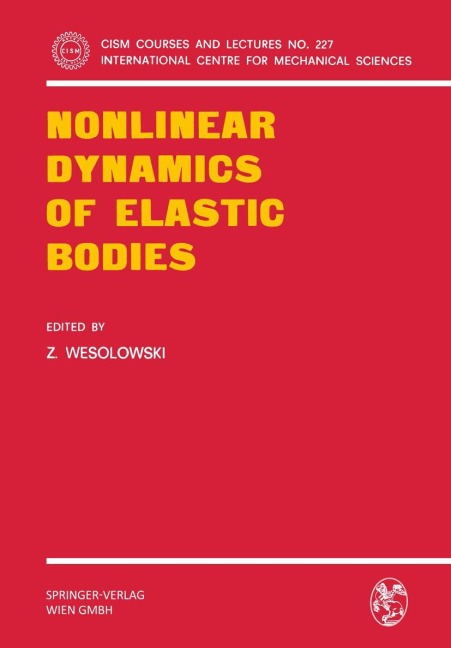
Nonlinear Dynamics of Elastic Bodies
-20% with code BOOKS
In stock at our supplier
Information Systems Methodology: Proceedings, 2nd Conference of the European Cooperation in Informatics, Venice, October 10-12, 1978
-20% with code BOOKS
In stock at our supplier
Applied Algebra, Algebraic Algorithms and Error-Correcting Codes: 5th International Conference, AAECC-5, Menorca, Spain, June 15-19, 1987. Proceedings
-20% with code BOOKS
In stock at our supplier
Applied Algebra, Algebraic Algorithms and Error-Correcting Codes: 6th International Conference, AAECC-6, Rome, Italy, July 4-8, 1988. Proceedings
-20% with code BOOKS
In stock at our supplier
Symbolic and Algebraic Computation: International Symposium ISSAC 88, Rome, Italy, July 4-8, 1988. Proceedings
-20% with code BOOKS
In stock at our supplier
Mathematical Foundations of Computer Science 1989: Porabka-Kozubnik, Poland, August 28 - September 1, 1989. Proceedings
-20% with code BOOKS
In stock at our supplier
Computational Methods and Function Theory: Proceedings of a Conference held in Valparaiso, Chile, March 13-18, 1989
-20% with code BOOKS
In stock at our supplier
Mathematical Foundations of Computer Science 1990: Banska Bystrica, Czechoslovakia, August 27-31, 1990 Proceedings
-20% with code BOOKS
In stock at our supplier
Attribute Grammars and their Applications: International Conference, Paris, France, September 19-21, 1990
-20% with code BOOKS
In stock at our supplier
Rewriting Techniques and Applications: 4th International Conference, RTA-91, Como, Italy, April 10-12, 1991. Proceedings
-20% with code BOOKS
In stock at our supplier
Applied Algebra, Algebraic Algorithms and Error-Correcting Codes: 8th International Conference, AAECC-8, Tokyo, Japan, August 20-24, 1990. Proceedings
-20% with code BOOKS
In stock at our supplier
Category „Maths for computer scientists“
Mathematics is the foundation upon which the field of computer science is built. For computer scientists, a strong grasp of mathematical concepts is essential to understanding algorithms, data structures, and the theoretical aspects of computation. This category offers a curated selection of books that nurture this understanding, specifically tailored for those who are delving into the intricate world of computing and information technology.
The rich history of mathematics in computer science dates back to the early days of computing, when pioneers like Alan Turing laid the groundwork for computational theory. As technology has evolved, so too has the role of mathematics within the discipline. From discrete mathematics and its applications in algorithm design to numerical methods that inform data analysis, this category provides resources that span the breadth of mathematical theory pertinent to computer science.
Readers interested in enhancing their computational skills will find substantial benefits in exploring these titles. Not only do they cover essential topics such as logic, set theory, and graph theory, but they also delve into the abstract mathematical concepts that underpin modern computing techniques. These books serve as both comprehensive guides and valuable references, enabling computer scientists to sharpen their analytical skills and improve their problem-solving capabilities.
The authors and publishers featured in this category are recognized experts in their fields, bringing years of research and teaching experience. Their insights make complex subjects accessible and engaging, ensuring that readers gain a profound understanding of mathematical principles as they apply to computer science. By immersing themselves in these texts, scholars and professionals alike can drive innovation and advance their expertise in the ever-evolving world of technology.